Short answer: Coloured hair does best with less frequent washing, lukewarm water, a sulfate-free shampoo, a conditioner on the lengths every wash, and a mask once or twice a week. Colour fades mainly through friction, heat, sun and harsh cleansing, so the goal is to be gentler at each step.
Why does coloured hair need a different routine?
Colouring, bleaching, highlights and smoothing treatments all change the hair’s outer layer. Treated hair tends to be drier, more porous and more tangle-prone than virgin hair, so it loses moisture faster and shows damage sooner. Colour molecules can also wash out of porous hair more easily, which is why shade and shine fade between salon visits. Care at home will not change how much damage the treatment caused, but it can make treated hair feel softer and help it look better for longer.
Step 1: Choose a gentle, sulfate-free shampoo
Strong cleansing agents can strip oils and dull colour. Many people with treated hair switch to sulfate-free formulas, which clean more gently. Our post on the best sulfate-free shampoo in India explains what to look for, and why people choose paraben-free formulas covers the other common label claim. The Rosemary Biotin Anti-Hairfall Shampoo is listed on its product page as paraben-free and sulfate-free and suitable for all hair types, including damaged hair.
A sulfate-free label alone does not guarantee colour will last, so also look at how you wash:
- Wash with lukewarm water rather than hot.
- Focus shampoo on the scalp and let the rinse clean the lengths.
- Wait a few days after colouring before the first wash if your colourist advises it.
- Spread washes out where your scalp allows. See how often to wash your hair for guidance by hair type.
Step 2: Condition every single wash
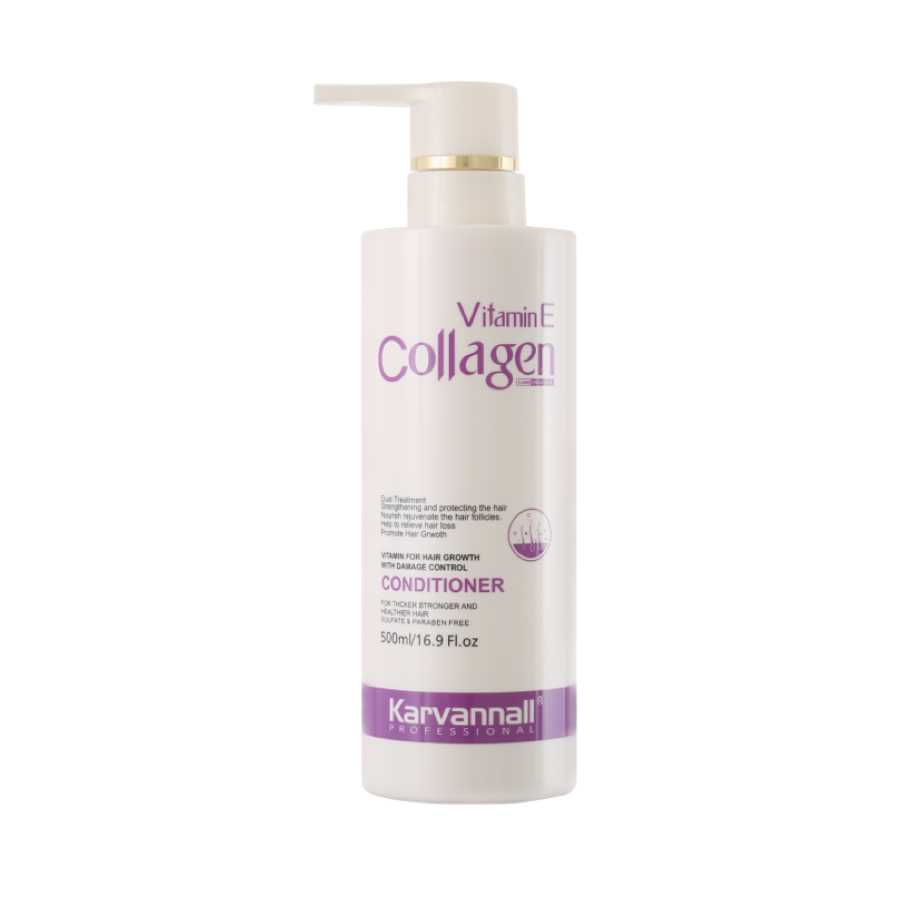
Conditioner smooths the outer layer and makes combing easier, which reduces breakage. The Karvannall Vitamin E Collagen Hair Conditioner page describes a sulphate-free, paraben-free formula that is suitable for all hair types, including colour-treated hair and sensitive scalps. Its directions are to apply to wet hair after shampooing, massage into the scalp and strands, leave for 2 to 3 minutes and rinse thoroughly.
Step 3: Add a mask once or twice a week
A mask gives treated hair an extra dose of conditioning. The Collagen Shea Butter Moisture Hair Treatment Mask is described as a treatment for dry, damaged and chemically processed hair, to be applied to towel-dried hair for 5 to 7 minutes, two to three times a week. Many people start at once a week and adjust. Our guide on how to use a hair mask covers the technique.
Step 4: Protect from heat and sun
Heat tools and strong sun both accelerate fading and dryness. A heat protectant before blow-drying or straightening, a lower temperature setting, and a scarf or hat in strong midday sun are simple habits that help. Indian summers and long commutes can be especially hard on exposed hair.
Step 5: Handle wet hair gently
Wet hair is at its weakest. Detangle with a wide-tooth comb from the ends up, pat dry with a soft towel or old cotton T-shirt, and avoid tight ponytails on damp hair.
What should you avoid with coloured hair?
- Very hot showers.
- Daily shampooing with strong cleansers if your scalp does not need it.
- Repeated bleaching or colouring over previously treated lengths.
- Swimming without rinsing first, since chlorinated water can affect colour.
- Layering many heavy products on the scalp.
A sample weekly routine
| Day | Routine |
|---|---|
| Wash day 1 | Gentle shampoo, conditioner on the lengths |
| Wash day 2 | Gentle shampoo, mask for the recommended time, rinse well |
| Wash day 3 (optional) | Shampoo, conditioner |
| Other days | Rinse or dry shampoo if needed, protect the hair from sun |
Adjust the number of wash days for your scalp type and how quickly it gets oily.
When should you ask your colourist or a doctor?
If your hair snaps easily, feels gummy when wet, or you have scalp stinging, redness or itching after colouring, stop using the product and speak to your colourist or a dermatologist. A patch test before colour is a sensible precaution for allergic reactions. Sudden or patchy hair loss should be checked by a doctor rather than managed with products. You can explore the whole range on the shop page.
Frequently asked questions
Is sulfate-free shampoo better for coloured hair?
Many people find sulfate-free shampoos gentler on treated hair, but water temperature, how often you wash and heat styling also affect how long colour lasts.
How often should I wash coloured hair?
As rarely as your scalp comfortably allows. Many people with coloured hair wash two to four times a week, though this depends on your scalp and climate.
Can I use a hair mask on coloured hair?
Yes. Treated hair often benefits from a mask once or twice a week. Follow the directions on the product and rinse thoroughly.
Does conditioner stop colour fading?
Conditioner cannot stop fading completely, but it smooths the hair and lowers breakage and tangling, which helps treated hair look better between salon visits.