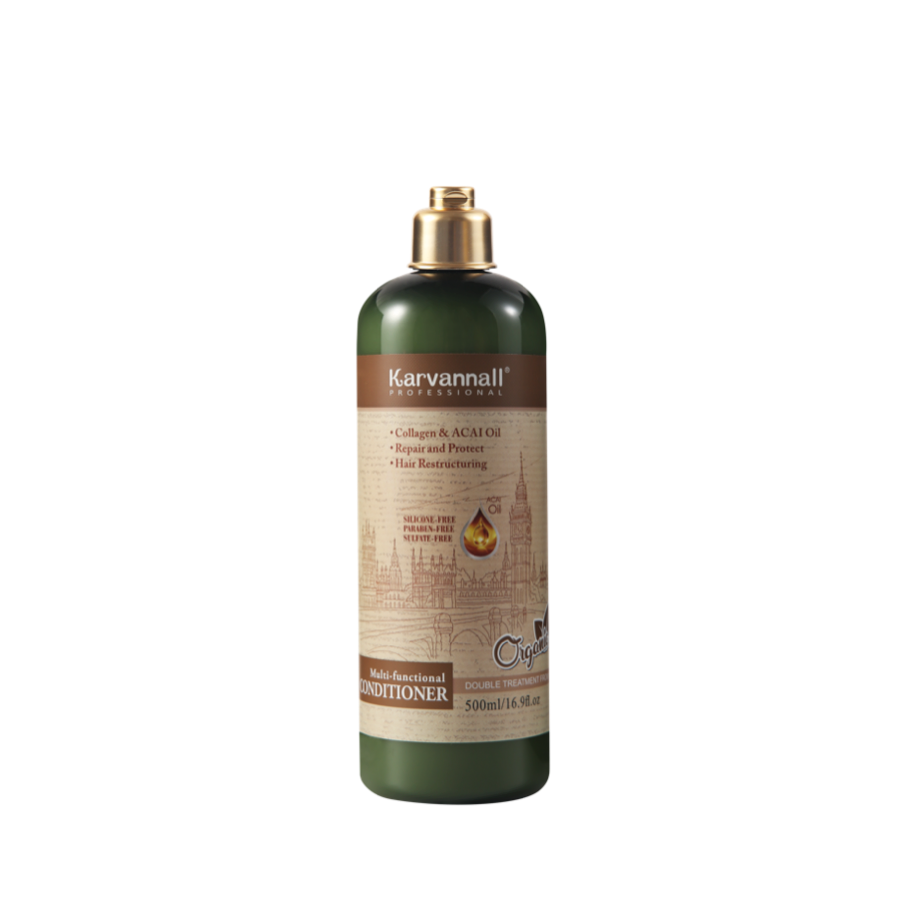
Short answer: silicones are ingredients that coat the hair to make it feel slippery and look shiny. They are not harmful in themselves, but they can build up on fine, oily or product-heavy hair and leave it flat or coated. A silicone-free conditioner gets its softness from other conditioning ingredients and is worth trying if your hair goes limp quickly.
What are silicones in hair care?
Silicones are synthetic ingredients used in many conditioners, serums and smoothing products. On an ingredient list you can often spot them by their endings: -cone, -conol or -siloxane (for example dimethicone, amodimethicone or cyclopentasiloxane). They form a thin film on the hair that reduces friction, so hair combs easily and looks glossy.
Not all silicones behave the same way. Some are water-soluble and rinse away easily, while others are designed to stay on the hair until a stronger shampoo removes them.
Are silicones bad for your hair?
No, and anyone who says they are always bad is oversimplifying. Silicones are good at what they do: they cut frizz and tangling and make hair feel instantly smooth. The downside is that some people find the coating adds up over time, especially if they wash often, use several styling products or have fine hair.
So the real question is not whether silicones are good or bad, but whether your hair copes well with them.
Signs of product build-up
- Hair looks limp or greasy again within a day of washing
- It feels coated, waxy or heavy, even when clean
- Curls or waves lose their shape
- Hair looks dull and does not seem to take in masks or oils
These signs can have other causes too, such as an oily scalp or using too much product, so treat build-up as one possible explanation, not a diagnosis.
Who is a silicone-free conditioner good for?
- Fine or thin hair that gets weighed down easily
- Normal to oily hair where roots turn greasy quickly
- Wavy and curly hair that needs definition
- People who wash often and layer several products
If your hair is very coarse or very dry, you might actually like the slip silicones give. A silicone-free formula can still work, but you may want to pair it with a richer weekly mask.
How to switch to a silicone-free conditioner
- Expect an adjustment. Hair can feel a little less slippery at first, because the coating you were used to is no longer being added.
- Use enough product. Coat the hair evenly from mid-lengths to ends and comb through with a wide-tooth comb.
- Consider a clarifying wash first if you suspect heavy build-up from your previous products.
- Add a weekly mask if your ends feel dry during the transition.
Our silicone-free option
The Karvannall Silicone-free Hair Conditioner (often searched as a silicone-free conditioner) is formulated for normal to oily hair. According to its product page it is meant to make hair shiny and soft without leaving it greasy, and it contains acai extract and collagen. To use it, apply enough to coat the hair evenly from mid-shaft to ends, leave for 1 to 2 minutes, then rinse out thoroughly.
The product page suggests following it with the Double Treatment Hair Mask for extra conditioning. New to masks? Read our guide to hair mask vs conditioner.
How to check a label
Do not rely on the front of the bottle alone. Turn it around and read the ingredient list from the top, since ingredients are listed from highest to lowest amount. Look for names ending in -cone, -conol or -siloxane. If you do not see them, the product is likely silicone-free, though water-soluble silicones may appear under names starting with PEG or PPG, so check those too if you want to avoid them completely.
Frequently asked questions
Is silicone-free conditioner better for hair?
Not for everyone. It tends to suit fine, oily or product-heavy hair that goes flat easily. Very dry or coarse hair may prefer the extra slip silicones give, so it comes down to how your own hair behaves.
Is silicone-free the same as sulfate-free?
No. Silicones are conditioning ingredients that coat the hair, while sulfates are cleansing agents found in shampoos. A product can be free of one, both or neither.
Will a silicone-free conditioner make my hair frizzy?
It can feel less slippery at first because the coating you were used to is gone. Using enough product, combing it through and adding a weekly mask usually helps while your hair adjusts.
Do I need a clarifying shampoo when I switch?
Only if you suspect heavy build-up, for example hair that feels coated or waxy. One clarifying wash before you start can give the new conditioner a clean base.