Short answer: Dandruff flakes are usually larger, yellowish or white and cling to an oily scalp, while dry scalp flakes are small, white and powdery and often come with tightness on skin that feels dry elsewhere too. The two need different handling, so it helps to identify which one you have before changing your shampoo.
Why do people confuse dandruff and dry scalp?
Both show up as flakes on your shoulders, and both can itch. That is why many people reach for the same anti-dandruff product for everything. In reality, the causes differ. Dry scalp is mostly about too little moisture or too much stripping. Dandruff is generally linked to an oily, irritated scalp and a yeast that lives naturally on skin. Dermatology bodies describe dandruff as a mild form of seborrhoeic dermatitis, which is why persistent cases deserve proper medical advice.
How can you tell which one you have?
Look at the flakes, then at the scalp itself.
| Sign | Dry scalp | Dandruff |
|---|---|---|
| Flake size | Small, fine, powdery | Larger, can look oily or yellowish |
| Scalp feel | Tight, dry, sometimes rough | Greasy or oily, sometimes red |
| Rest of your skin | Often dry too, especially in winter | Not necessarily dry |
| Hair after washing | Feels dry or straw-like | Gets oily quickly |
| Seasonal pattern | Worse in cold, dry weather or with AC | Can flare in humid, sweaty weather |
This is a rough guide, not a diagnosis. Some people have both at once, and other conditions such as psoriasis or eczema can look similar.
What helps a dry scalp?
The aim is to stop stripping the scalp and keep moisture in.
- Wash with a mild, sulfate-free shampoo and lukewarm rather than hot water.
- Do not wash more often than you need to. Our guide on how often to wash your hair explains how to set a rhythm by hair type.
- Apply conditioner mainly to the lengths, and rinse shampoo off fully so nothing is left behind.
- In winter, follow the steps in our winter moisture routine.
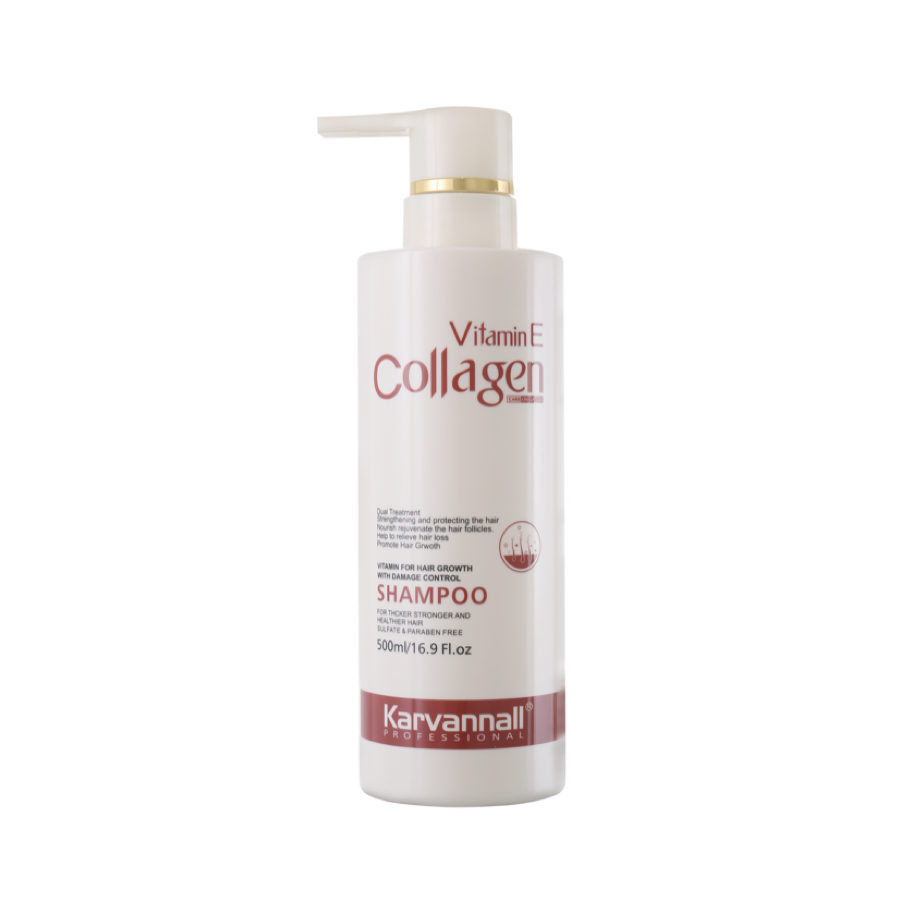
A gentle shampoo such as Karvannall Vitamin E Hair Shampoo is described on its product page as moisturising and hydrating, which suits this kind of routine. It is a cleanser, not a treatment for a scalp condition.
What helps dandruff?
Because dandruff is tied to oil and a naturally occurring yeast, regular washing usually helps rather than hurts. Many people find that washing consistently with a shampoo that suits an oily scalp keeps flaking down. Medicated anti-dandruff shampoos contain specific active ingredients, for example zinc pyrithione, ketoconazole or selenium sulfide, and the label will say so. Karvannall shampoos are not sold as medicated anti-dandruff treatments, so if your flaking is persistent, a medicated product or a doctor’s advice is the right route.
If your scalp is on the oily side, our comparison of the best shampoo for an oily scalp in India and the guide to shampoo for hair fall and dandruff are good next reads.
Can your products make flakes worse?
Yes, sometimes. Flakes that are really product build-up are often mistaken for dandruff. Heavy oils, leave-in products or too much conditioner at the roots can sit on the scalp and flake off as the day goes on. If you suspect build-up, cut back on what you apply near the roots for two weeks and see if the flakes change. A shampoo that is described as dissolving impurities and build-up, such as Keratin & Argan Hair Shampoo, can fit into that kind of reset, but it is a general cleanser and not a dandruff product.
A simple two-week test
- Wash on a steady schedule with a gentle shampoo and lukewarm water.
- Keep conditioner and oils off the scalp.
- Do not scratch, and avoid very hot water and tight, sweaty headwear.
- Note whether flakes shrink, change colour or the scalp feels less tight.
If nothing changes, the next step is a medicated shampoo or a visit to a dermatologist rather than more experimenting.
When should you see a dermatologist?
See a doctor if you notice redness, sore or weeping patches, thick scaling, scalp pain, a rash that spreads to your face or ears, or hair loss in patches. Sudden or patchy hair loss is not something to treat with shampoo alone. You can browse our full range on the shop page, but any scalp condition that does not settle needs a professional opinion.
Frequently asked questions
Is dandruff caused by dirty hair?
No. Dandruff is linked to scalp oil, skin sensitivity and a yeast that lives on most scalps. Washing more regularly often helps, but being clean or unclean is not the cause.
Can dry scalp turn into dandruff?
They are separate issues, though you can have both at the same time. Treating the wrong one can make things worse, for example over-washing a dry scalp or over-oiling a dandruff-prone one.
Does hair oil cure dandruff?
Oil does not treat dandruff. On an oily or flaky scalp it can add to build-up, so many people do better keeping oil to the lengths and ends.
How long before flakes improve?
With a suitable routine, many people see a change within a few weeks. If there is no improvement after about four weeks, or the scalp is red or sore, see a dermatologist.
From the Karvannall range
If what you have is dandruff rather than a dry scalp, the Keratin and Argan 2-in-1 Anti-Dandruff and Anti Hair Fall Shampoo (500 ml) is the product in our range made for it. It is a cosmetic shampoo, not a medical treatment, so flaking that is severe or keeps returning is worth showing to a dermatologist.