Short answer: Neither is automatically better. A kitchen mask made from curd, banana, egg or aloe is cheap and fine for an occasional treat if you use fresh ingredients and patch test first, but its results are inconsistent and it cannot be stored. A store-bought mask is made to a set formula, with preservatives and a stable texture, so it gives predictable results and rinses out more cleanly. What matters most is matching the mask to your hair type and using it correctly.
What do people usually put in a DIY hair mask?
Common home recipes in India use ingredients that are already in the kitchen:
- Curd (dahi): often used for softness and to loosen dry flakes.
- Banana: mashed for a thick, creamy mask for dry hair.
- Egg: used for its protein content.
- Aloe vera gel: for a light, cooling slip on the scalp and hair.
- Coconut or olive oil: for pre-wash conditioning.
Many people like these because they feel natural and cost very little. Some people see their hair feel softer for a day or two. There is not much solid research proving specific kitchen masks improve hair, so treat results as personal rather than guaranteed.
What are the real downsides of a DIY mask?
- Freshness and hygiene. Fresh food spoils. A mask mixed today cannot be kept for next week, and applying spoiled curd or fruit to your scalp is a bad idea.
- Inconsistent results. Every banana, egg and spoon of curd differs, so the mask is never quite the same twice.
- Messy rinsing. Banana lumps and egg residue can stay in the hair. Egg can also scramble if rinsed with hot water, so use lukewarm or cool water.
- Irritation or allergy. Natural does not mean harmless. Lemon, raw onion juice and some oils can irritate the scalp. Patch test on the inner arm first.
- Smell. Egg and curd can leave an odour that is hard to rinse away.
What do store-bought masks do differently?
A formulated hair mask is designed to be spreadable, stable on the shelf and easy to rinse. It usually contains conditioning agents that coat the hair, plus a preservative system so it does not spoil. That is why a mask is richer than a regular conditioner, as explained in hair mask vs conditioner. The trade-off is cost, and the fact that you must choose one that suits your hair, since a heavy mask can weigh down fine or oily hair.
How do the two compare side by side?
| Factor | DIY mask | Store-bought mask |
|---|---|---|
| Cost per use | Low | Higher, but a large tub lasts many uses |
| Consistency | Varies each time | Same formula each time |
| Storage | Use immediately | Stays stable in the pack |
| Rinsing | Can leave residue or smell | Designed to rinse out cleanly |
| Allergy risk | Depends on what you use; patch test | Check the ingredient list; patch test if sensitive |
| Effort | Mixing and cleaning up | Open the lid and apply |
How do I choose between them?
If you enjoy a weekend ritual and your scalp is not sensitive, a simple DIY mask now and then is harmless. If you want a steady weekly routine for dry or damaged hair, a formulated mask is easier to use correctly. Whichever you pick, the technique matters more than the recipe: apply to mid-lengths and ends, leave for the recommended time and rinse thoroughly. Our step-by-step guide to using a hair mask covers the details, and hair spa at home shows how to build a full at-home routine. Avoid overnight kitchen masks; read can you leave a hair mask on overnight first.
Which Karvannall masks are available?
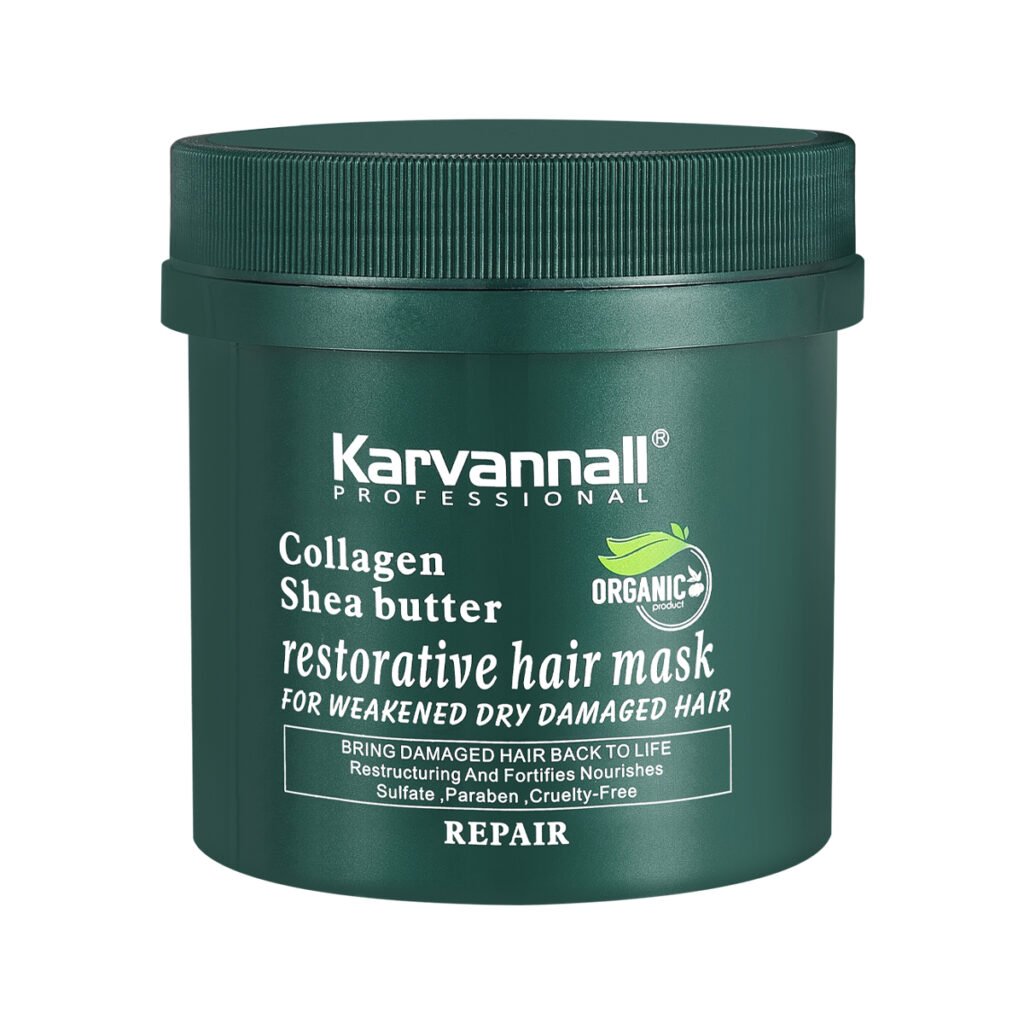
The Collagen Shea Butter Moisture Hair Treatment Mask is listed for dry, damaged and weakened hair and is sulfate-free and paraben-free. Its page suggests once a week for most hair and twice a week for very dry or rough hair, and says it replaces your conditioner on mask day.
The Double Treatment Hair Mask is described as a deeply moisturising treatment with collagen and acai extract for normal to oily hair that balances the natural oil. Its page suggests applying it from mid-shafts to ends after shampooing and conditioning, once or twice a week. If your scalp is oily, this guide to hair masks for an oily scalp explains how to keep roots clean. The full range is in the shop.
When should I stop and see a doctor?
Stop any mask, home-made or bought, if you get burning, swelling, rash or lasting itching. If hair loss is sudden or patchy, or the scalp stays inflamed, see a dermatologist rather than adding more treatments.
Frequently asked questions
Is a homemade hair mask better than a store-bought one?
Not necessarily. Homemade masks are cheap but vary each time and spoil quickly. Store-bought masks are consistent and stable. The right choice depends on your hair type and how you like to care for it.
How often can I use a DIY hair mask?
Once a week is a reasonable limit for most people. Always use fresh ingredients, patch test first and rinse thoroughly with lukewarm or cool water.
Can I use a homemade mask and a store-bought mask in the same week?
You can, but keep it modest. Using masks too often can leave hair limp or heavy. Space them out and see how your hair responds.
Do I still need conditioner on the day I use a mask?
Usually not. A mask replaces conditioner on that wash day rather than going on top of it.