Short answer: For most people, conditioner is meant for the mid-lengths and ends of the hair, not the roots. The scalp already makes its own oil, and putting conditioner there can leave roots flat, greasy or itchy for some people. Very dry, coarse hair can handle conditioner a little closer to the roots, but it is rarely necessary.
Why is conditioner usually kept off the scalp?
Shampoo cleans the scalp and the hair near the roots. Conditioner is there to soften and smooth the lengths of your hair, which are older and have been through more washing, brushing and styling. The roots are the youngest hair and sit next to oil glands, so they usually do not need extra softening.
Conditioner left on the scalp can contribute to a few common complaints:
- Roots that look limp or greasy soon after washing
- A heavy, coated feeling on the scalp
- Residue that is not fully rinsed out, which some people find itchy
None of these happens to everyone. People with a dry scalp and thick hair often notice nothing. But if your roots turn oily within a day, keeping conditioner off them is a simple change worth trying.
Where exactly should you apply conditioner?
A good rule is to start about a hand-width below your scalp and work down. Squeeze water out of your hair first, so the conditioner does not get diluted, then:
- Take a coin-sized amount for shoulder-length hair, more for long or thick hair.
- Spread it between your palms.
- Smooth it through the mid-lengths and ends, using your fingers or a wide-tooth comb.
- Leave it on for a couple of minutes.
- Rinse until the hair no longer feels slippery.
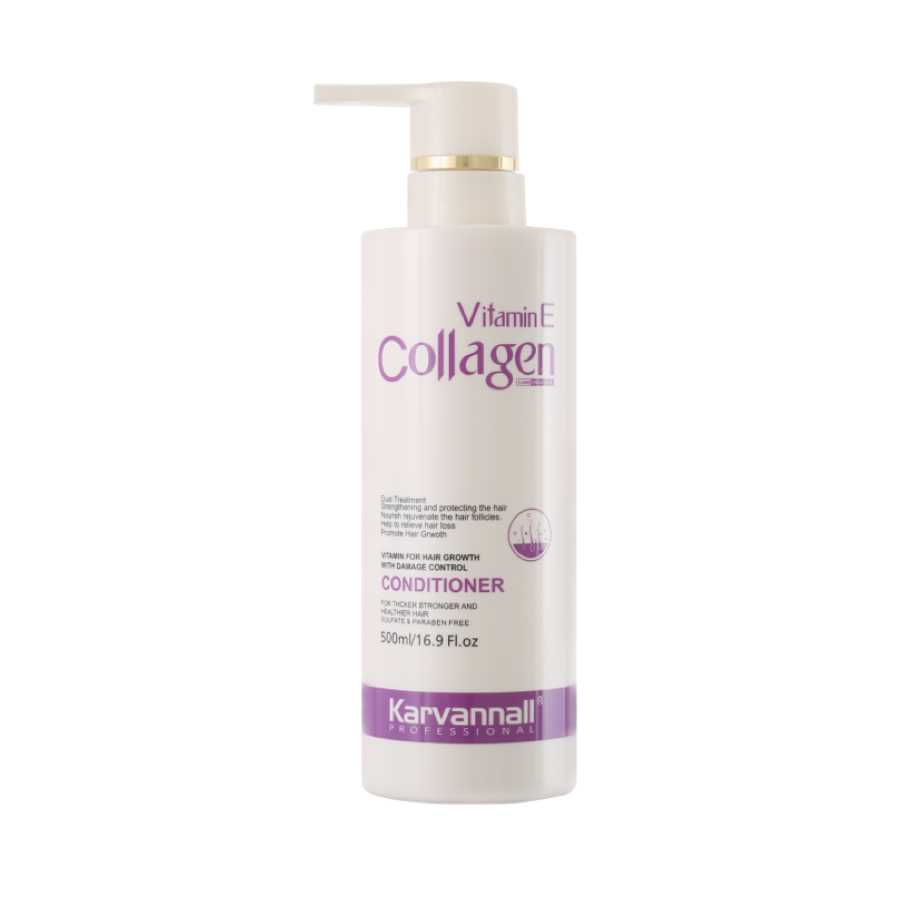
This matches the directions on our product pages. The Karvannall Vitamin E Collagen Hair Conditioner page says to apply it to the mid-lengths and ends after shampooing, leave it for two to three minutes, then rinse. For a broader walkthrough of the steps, see how to use conditioner properly.
What if you have an oily scalp but dry ends?
This is very common, especially in humid cities. Your roots produce oil that never quite reaches the ends. The answer is to treat the two zones differently: shampoo the roots well, and condition only the lengths. We cover this in detail in oily roots and dry ends.
If you are choosing a conditioner for hair that goes oily easily, the Karvannall Silicone-Free Hair Conditioner is described on its page as made for normal to oily hair, aiming for softness and shine without a greasy feel. It is applied from mid-shaft to ends. Whether silicone-free suits you is a personal choice, which we discuss in our silicone-free conditioner guide.
When can conditioner go closer to the scalp?
Some people with very dry, curly or coarse hair, or a dry and tight-feeling scalp, apply conditioner a little closer to the roots and are happy with the result. If you want to try that:
- Use a small amount and stop at the roots, rather than massaging it into the skin.
- Rinse for longer than usual.
- Watch for flaking, itching or greasy roots over the next few washes. If they appear, move back down.
If your scalp is already itchy or flaky, a different product will not necessarily fix it. Itching has several possible causes, and we list them in itchy scalp: common causes and when to see a doctor.
Is it a problem if conditioner touches the scalp by accident?
No. It is normal for some conditioner to reach the roots when you rinse, and a thorough rinse takes care of it. The aim is to avoid massaging a large amount into the scalp on purpose, not to keep every drop away.
What about hair masks?
The same logic applies. A mask is a richer product meant for the lengths. The Collagen Shea Butter Moisture Hair Treatment Mask page recommends applying it to towel-dried hair for five to seven minutes, and says that on mask day it replaces your conditioner. If your scalp is oily, our post on hair masks for an oily scalp explains how to use one without greasy roots.
Signs your conditioner placement needs changing
| What you notice | Possible fix |
|---|---|
| Roots greasy by evening | Keep conditioner at least a hand-width from the scalp; rinse longer |
| Ends still dry and tangled | Use a little more on the ends, and detangle while the conditioner is in |
| Hair feels sticky or coated | Use less product and rinse thoroughly |
| Scalp itchy or flaky | Check for residue first; see a doctor if it persists |
If you notice sudden or patchy hair loss, scalp pain or a rash, see a dermatologist instead of adjusting products.
Frequently asked questions
Can conditioner cause hair fall if applied on the scalp?
Conditioner does not directly cause hair to fall out. Heavy residue on the scalp can make roots greasy or itchy, and scratching or rough washing can then loosen hairs, so it is better to keep it on the lengths.
How much conditioner should I use?
A coin-sized amount is enough for shoulder-length hair. Use more for long or thick hair, and less for fine hair that gets weighed down easily.
Should I condition before or after shampoo?
After. Shampoo cleans the hair and scalp first, then conditioner smooths and softens the lengths. Rinse it out thoroughly afterwards.
Do I need conditioner if I use a 2-in-1 shampoo?
Many people still find a separate conditioner gives better results on dry or long hair. It depends on your hair type and how it feels after washing.