Short answer: Choose a shampoo for your scalp first and your hair lengths second. Scalp type (oily, normal, dry or flaky) decides how strong a cleanser you need, while dry, frizzy, coloured or damaged lengths decide how much softening support the formula should offer. Then give it a few weeks before judging.
Why does scalp type come first?
Shampoo is mainly for cleaning the scalp and roots. The lengths are rinsed by the lather. If your roots are oily by the next morning, a very rich formula will leave hair limp. If your scalp is dry and tight, a harsh cleanser will make it worse. Start with the scalp, then use conditioner or a mask for the lengths.
How do you match a shampoo to your hair and scalp?
| Your situation | What to look for |
|---|---|
| Oily roots within a day, normal ends | A lighter cleansing shampoo, used on the scalp only; see our oily scalp shampoo guide |
| Normal scalp, dull or rough hair | A gentle shampoo with softening ingredients |
| Dry, frizzy, coloured or chemically treated hair | A sulfate-free formula with moisturising ingredients, followed by conditioner |
| Flaky scalp | A shampoo made for scalp flaking; first check whether it is dandruff or dry scalp |
| Hair that sheds a lot | A gentle shampoo, plus a doctor’s check if shedding is sudden or patchy |
What do sulfate-free and paraben-free mean for you?
Sulfate-free shampoos usually lather less and clean more gently. That tends to suit dry, coloured or keratin-treated hair. It does not automatically make a shampoo better for everyone, and people with very oily scalps may still prefer a stronger cleanser. Our guide to reading a shampoo label covers these terms in more detail.
Which Karvannall shampoo suits which hair?
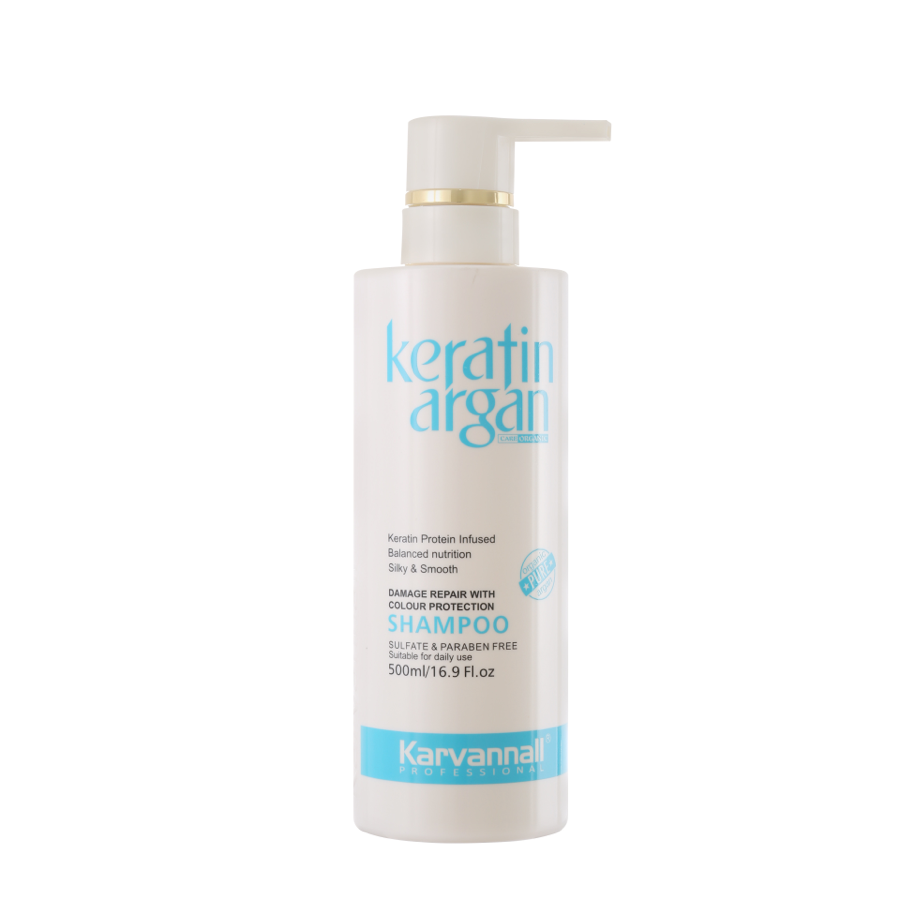
- Keratin and Argan Hair Shampoo: made for dry, frizzy and damaged hair. The product page says plainly that it is not the right starting point if your roots turn oily within a day.
- Vitamin E Hair Shampoo: made for smoothness and shine on normal to dry hair. It is not meant for an oily scalp, and we do not currently make an oil-control shampoo.
- Rosemary Biotin Anti-Hairfall Shampoo: a sulfate-free, paraben-free shampoo with rosemary extract and biotin, for hair that is prone to fall. No shampoo stops hair fall on its own.
You can compare the full range in our shop.
How long should you test a new shampoo?
Give it three to four weeks of regular use unless you get irritation. Scalps and hair take time to adjust, particularly when you change between formulas. Our post on switching shampoo and hair fall explains what is normal.
Do shampoo and conditioner need to match?
Not necessarily, but a matched pair makes it easier to judge what is working. We cover this in whether you need the same brand. Whatever you choose, how you wash matters as much as what you wash with; see how to wash your hair properly.
Frequently asked questions
How do I know my scalp type?
Wash your hair, then see how the roots feel the next morning and the day after. Oily roots by the next morning suggest an oily scalp; tightness or small dry flakes suggest a dry scalp.
Is sulfate-free shampoo better?
It is gentler and tends to suit dry, coloured or treated hair. It is not automatically better for every scalp, and very oily scalps may prefer a stronger cleanser.
Can one shampoo suit the whole family?
Only if everyone has a similar scalp and hair type. Oily and dry scalps need different things, so a gentle all-rounder is a compromise rather than an ideal.
How long before I know a shampoo works for me?
Three to four weeks of regular use is a fair trial, unless you notice irritation, in which case stop using it.