Short answer: Losing roughly 50 to 100 hairs a day is the commonly cited normal range, because every strand goes through a natural growth and shedding cycle. It is worth getting checked if you notice a clearly thinner parting, bald patches, hair coming out in clumps, or shedding that continues for more than a few months.
Why does hair fall every day?
Each hair follicle moves through phases: a long growing phase, a short transition phase, and a resting phase after which the hair sheds and a new one starts. At any moment, a small share of your hairs is in the resting phase, so a few dozen fall out daily even when your scalp is perfectly healthy.
You mostly notice this when you wash, brush or tie your hair. Because long hair makes a few strands look like a lot, the amount on the bathroom floor is not always a reliable measure.
How can you tell if your hair fall is normal?
Instead of guessing from a single bad day, look at the pattern over a few weeks.
- Look at the hair itself. A shed hair usually has a small white bulb at the root. That is the normal resting-phase hair. Short, broken pieces with no bulb point to breakage from styling or damage, which is a different problem.
- Do a simple wash-day count. Collect the hair that comes out in the wash and the brush for a few wash days and note the trend. You are looking for a clear and sustained increase, not an exact number.
- Check your parting and ponytail. A wider parting or a visibly thinner ponytail over several months is more meaningful than hair in the drain.
- Notice where it is happening. Even thinning all over is a different pattern from a single round patch.
Shedding or breakage: what is the difference?
| Sign | Shedding | Breakage |
|---|---|---|
| Length of fallen hair | Full length | Short, uneven pieces |
| Root end | Small white bulb | No bulb |
| Common triggers | Season, stress, illness, diet changes | Heat, tight styles, rough combing, chemical treatments |
| What helps | Time, scalp care, addressing the cause | Gentler handling, conditioning, trimming |
What can make shedding increase for a while?
Temporary spikes in shedding are common. Possible triggers include a high fever or illness, major stress, rapid weight loss, childbirth, some medicines, and changes in diet or iron and vitamin levels. Seasonal changes can play a part too, which is why many people notice more hair fall around the end of the monsoon. We cover that in Hair Fall After Monsoon.
This kind of shedding often shows up a couple of months after the trigger, so the cause is not always obvious. If it is linked to a one-time event, it frequently settles on its own, but that is not guaranteed, so do not wait indefinitely if you are worried.
What can you do at home?
Home care cannot change the underlying hair cycle, but it can reduce unnecessary loss and keep your scalp comfortable.
- Wash on a regular schedule. A clean scalp is more comfortable and you remove hairs that have already shed rather than letting them build up. Our guide to how often to wash your hair helps you pick a rhythm.
- Be gentle when wet. Detangle from the ends upward with a wide-toothed comb and avoid tight ponytails on wet hair.
- Condition the lengths. Conditioner keeps the hair easier to comb, which reduces breakage.
- Review your food and sleep. Prolonged shedding is often linked to nutrition and stress, which no shampoo can fix.
For a longer list of habits, see How to Reduce Hair Fall Naturally and Causes of Hair Thinning in Women.
Where do Karvannall products fit in?
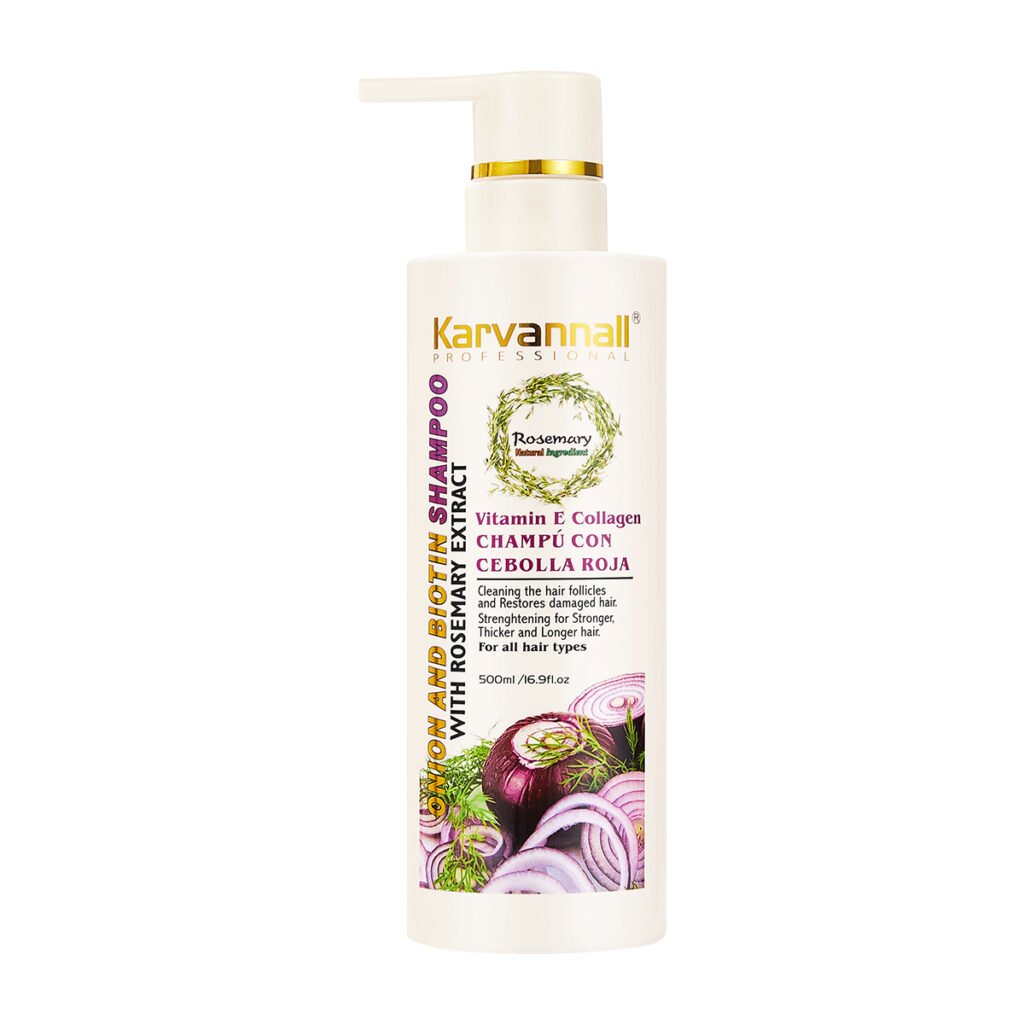
If you want a shampoo for a hair-fall routine, the Rosemary Biotin Anti-Hairfall Shampoo is a sulfate-free and paraben-free 500ml option that its product page describes as made with rosemary extract and biotin and suitable for all hair types. The Onion, Rosemary, Vitamin E and Collagen shampoo is positioned for dry and damaged hair. A shampoo cleans and conditions the scalp and hair; it does not treat the medical causes of hair loss, and our biotin shampoo article explains what biotin can and cannot do. You can browse everything in the shop.
When should you see a dermatologist?
Please book an appointment if you notice any of the following, rather than relying on products:
- Sudden or patchy hair loss, or round bald spots
- Hair coming out in handfuls or noticeable thinning that keeps progressing
- Scalp pain, burning, redness, scaling or a rash
- Shedding that has lasted longer than three to six months
- Hair loss along with fatigue, irregular periods or other health changes
A doctor can check for causes such as thyroid problems, nutrient deficiencies and scalp conditions, and recommend appropriate treatment.
Frequently asked questions
How many hairs is it normal to lose in a day?
A commonly cited range is about 50 to 100 hairs a day. Individual numbers vary with hair length, density and wash frequency, so the trend over several weeks matters more than a single day.
Is more hair fall normal when I wash my hair?
Yes, wash days often show more hair because strands that have already shed are released from the scalp. Washing does not cause the hair to fall; it removes hairs that were ready to shed.
How long does temporary hair shedding last?
Shedding triggered by illness, stress or childbirth often settles within a few months, but timing varies. If it continues beyond three to six months, see a dermatologist.
Can shampoo stop hair fall?
A shampoo cannot change the underlying causes of hair loss. A suitable shampoo keeps the scalp clean and the hair easier to handle, which can reduce breakage, but persistent hair loss needs a medical check.