Short answer: Shea butter is a rich plant fat that coats the hair and helps lock in moisture, so it suits dry, coarse, curly or chemically treated hair best. Fine or oily hair can find it heavy, so use it on the lengths and ends rather than on the scalp, and start with a small amount.
What is shea butter and why is it used on hair?
Shea butter comes from the nuts of the shea tree and is solid at room temperature. It is made up largely of fatty acids, which is why it feels rich and melts on contact with warm skin. In hair care it works mainly as an emollient: it softens the hair surface, reduces the rough, dry feel and helps slow moisture loss from the strand.
It does not repair the hair’s inner structure, and it does not make new hair grow. What it can do is make dry hair feel softer, look smoother and be easier to comb, which in turn can mean less breakage from tugging.
Who is shea butter good for?
- Dry or brittle hair that feels rough, especially in winter. See our winter moisture routine for the full picture.
- Curly and wavy hair, which tends to dry out because natural oils travel slowly down the bends of the strand.
- Colour-treated or heat-styled hair that needs extra softness. We explain the rest of that routine in caring for colour-treated hair.
Who might find shea butter too heavy?
Fine, straight or oily hair can look flat or greasy with rich butters, especially when applied near the roots. If your scalp gets oily quickly, keep any shea butter product away from the scalp, use a small amount, and rinse thoroughly. If your hair already feels limp or coated, you may need a lighter product or a clarifying wash rather than more richness.
If you are unsure whether your hair wants moisture or strength, our guide to protein vs moisture will help you decide.
How do you use a shea butter hair mask?
- Shampoo first so the mask is not sitting on product buildup.
- Squeeze out excess water so the hair is towel-dried, not dripping.
- Apply from mid-lengths to ends, then comb through gently with a wide-toothed comb.
- Leave it on for the time stated on the pack.
- Rinse with lukewarm water until the hair no longer feels slippery.
More detail and common mistakes are in How to Use a Hair Mask Properly, and Hair Mask vs Conditioner explains where a mask fits next to your regular conditioner.
Which Karvannall product contains shea butter?
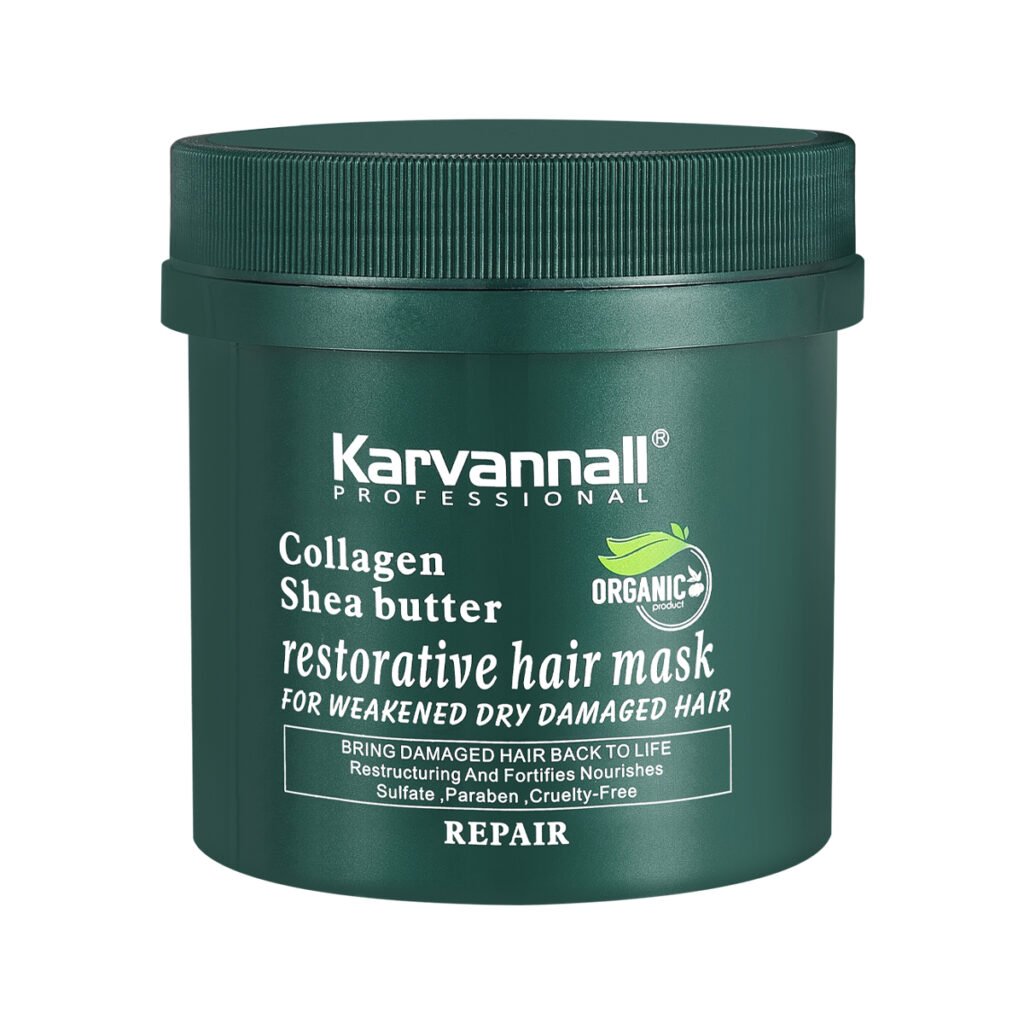
The Collagen Shea Butter Moisture Hair Treatment Mask is the one to look at. Its product page describes it as a cream-form mask made with collagen and shea butter for dry, damaged and weakened hair, sulfate-free and paraben-free. The usage directions on the page are to apply to towel-dried hair for 5 to 7 minutes, 2 to 3 times a week. If you are new to masks, starting at the lower end of that range and watching how your hair responds is sensible.
For hair that is normal to oily and needs lighter hydration, the Double Treatment Hair Mask is described on its page as a collagen and acai mask that balances the natural oil. You can see everything else in the shop.
Can shea butter cause problems?
Shea is generally well tolerated, but any hair product can irritate some scalps. Patch test a new product on a small area of skin first, and stop using it if you notice itching, redness or a rash. People with tree nut allergies should check with their doctor before using shea products, since shea is derived from a nut. Persistent scalp irritation, flaking or pain deserves a dermatologist’s opinion rather than a switch of products.
Frequently asked questions
Is shea butter good for hair?
It can be, mainly for dry, coarse, curly or chemically treated hair, because it softens the strands and helps keep moisture in. It does not repair damage permanently or regrow hair, and it can feel heavy on fine or oily hair.
Can I put shea butter on my scalp?
Most people are better off keeping rich butters on the lengths and ends. Oily or dandruff-prone scalps can get greasier or more uncomfortable, so if you want to try it, use a very small amount and watch how your scalp responds.
How often should I use a shea butter hair mask?
Follow the directions on the product. The Karvannall mask page suggests 2 to 3 times a week for dry and damaged hair; many people with milder dryness do well with once a week.
Is shea butter the same as a conditioner?
No. A conditioner is a quick everyday product, while a shea butter mask is richer and left on longer. Many people use both, with the mask once or twice a week.