Short answer: To protect hair from heat styling, use the lowest temperature that works, dry hair mostly by air or on low heat first, never style soaking-wet hair with a hot iron, add a heat protectant made for the purpose, and keep conditioning the lengths. Heat damage cannot be fully reversed, so prevention and trimming matter most.
What does heat do to hair?
Hair is made mostly of keratin protein, covered by overlapping surface scales called the cuticle. High heat can roughen the cuticle, dry the strand and, at very high temperatures or with repeated passes, weaken the protein structure. The result is hair that feels rough, frizzes more easily, looks dull and snaps or splits at the ends.
Signs of heat damage include a straw-like texture, ends that will not smooth, curls that no longer hold their shape, and short broken pieces when you comb. If that sounds familiar, our guide to whether split ends can be repaired sets out what is realistic.
How do you reduce damage from a hair dryer?
- Towel-dry gently first. Squeeze out water instead of rubbing.
- Let the hair air-dry partly. The less time under the dryer, the less heat exposure.
- Use a low or medium setting and keep the nozzle a hand’s width from the hair.
- Keep the dryer moving, rather than blasting one section.
- Finish with a cooler setting to help the surface lie flatter.
How do you use a straightener or curling iron more safely?
- Start with fully dry hair. Steam from wet hair under a hot plate is rough on the strand.
- Choose the lowest temperature that gives the result. Fine or damaged hair usually needs less heat than thick, coarse hair. Check your tool’s manual for its settings.
- Do one slow pass per section. Repeated passes cause more damage than a single careful pass.
- Work in small sections so you do not need to go back over the hair.
- Do not heat-style every day. Give your hair rest days.
Do you need a heat protectant?
A heat protectant is a product designed to create a barrier and slow heat transfer; products vary in how well they do this, and none make heat styling risk-free. Look for a product whose label specifically says it is for heat protection. A general hair oil or serum is not automatically a heat protectant, so do not assume it is.
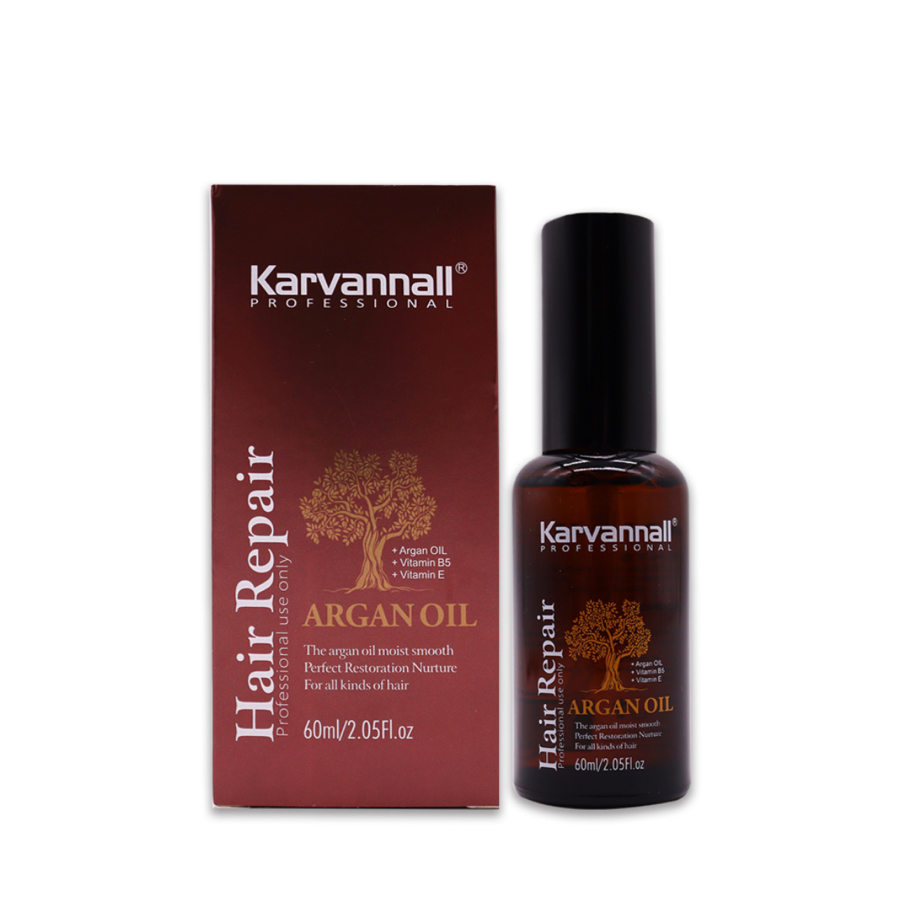
The Karvannall Argan Oil page describes a lightweight oil that smooths frizz and flyaways, boosts shine and improves manageability, applied to wet or damp hair and not rinsed out. It does not describe itself as a heat protectant, so check the label before relying on it for that purpose, and use a small amount so hair does not look greasy. Our post on how to use argan oil on hair covers how much to use.
How do you care for hair that is already heat-damaged?
You cannot rebuild a badly damaged strand, but regular conditioning can make it feel smoother and reduce further breakage.
- Condition every wash. The Keratin and Argan Hair Conditioner is described on its product page as hydrating and conditioning, improving smoothness, shine and manageability.
- Add a mask once or twice a week. The Collagen Shea Butter Moisture Hair Treatment Mask is described for dry, damaged and weakened hair, with directions to apply to towel-dried hair for 5 to 7 minutes. Lighter, normal-to-oily hair might look at the Double Treatment Hair Mask.
- Trim the damaged ends. A regular trim removes split ends before they travel further up the strand.
- Decide between protein and moisture. Our protein vs moisture guide will help.
If your hair is also coloured, combine these steps with our colour-treated hair routine, since colour and heat together are harder on hair than either alone. You can see all options in the shop.
Is there a safer way to get straight or curly styles?
Heatless options like overnight braids, rollers, or wrapping damp hair can create waves without any hot tools. For straight styles, a blow-dry on low heat with a round brush is generally gentler than repeated flat-iron passes. Results differ with hair type, so try on a small section first.
When should you see a professional?
See a stylist if your hair is breaking in large amounts, if a chemical straightening or smoothing treatment has left it very damaged, or if you are unsure which temperature your hair can tolerate. See a dermatologist if you notice scalp burns, pain, redness, a rash, or sudden or patchy hair loss. Scalp symptoms are not hair-care problems and should not be handled with products alone.
Frequently asked questions
What temperature is safe for straightening hair?
There is no single safe number because it depends on your hair type and condition. Use the lowest setting that gives the result, keep to one slow pass, and use less heat on fine, coloured or damaged hair.
Can heat-damaged hair be repaired?
Not fully. Conditioners and masks can make damaged hair feel smoother and reduce further breakage, but badly damaged ends usually need trimming.
Is air drying better than blow drying?
Air drying avoids heat exposure, but sitting in wet hair for hours is not ideal either. A good compromise is to let hair air-dry partly, then finish on low heat from a distance.
Is argan oil a heat protectant?
Not necessarily. Argan oil adds smoothness and shine, but only a product labelled for heat protection should be relied on for that job. Check the label of the specific product.