Short answer: Most people do not need a scalp scrub. Regular, thorough shampooing already removes oil, sweat and product from the scalp. A gentle scrub or exfoliating wash once a week or less may help if you get visible build-up, but it can irritate a sensitive, flaky or inflamed scalp. Research on scalp exfoliation for hair health is limited, so treat it as an optional extra, not a necessity.
What does a scalp scrub do?
A scalp scrub uses small particles, or a chemical exfoliant, to loosen dead skin cells, oil and product residue from the scalp. The aim is a cleaner-feeling scalp, particularly for people who use oils, styling products or dry shampoo often.
Who might benefit?
- People who use heavy hair oils or styling products and notice a waxy layer at the roots.
- People who use dry shampoo for several days in a row.
- Those whose scalp feels itchy from build-up, not from a medical problem.
If you only wash with a good shampoo every two to three days and your scalp feels comfortable, you probably do not need one.
Who should skip it?
- Anyone with red, painful, cracked or oozing skin on the scalp.
- Anyone with suspected dermatitis, psoriasis or an untreated fungal problem. A scrub can make these worse.
- Anyone who just had colour, bleach or a chemical treatment, until the scalp has settled.
- People with very dry, tight scalps, who may find scrubs too harsh.
Persistent flaking and itching need a proper diagnosis. Read dandruff vs dry scalp and itchy scalp causes and when to see a doctor before reaching for a scrub.
How to exfoliate your scalp safely
- Section the hair and wet the scalp fully.
- Apply a small amount of scrub with your fingertips, not your nails.
- Massage in light circles for about a minute. Pressure should be gentle.
- Rinse thoroughly, then shampoo as usual.
- Condition the lengths and ends, keeping conditioner off the scalp.
Do this no more than once a week to start. Stop if you notice stinging, redness or increased flaking.
Better first steps than a scrub
Often the issue is technique, not a lack of exfoliation. Try these first:
- Wash the scalp with enough shampoo and a minute or so of fingertip massage. See how to wash your hair properly.
- Rinse longer than you think you need to.
- Use a clarifying wash only when you see build-up. See signs of product build-up.
- Choose a shampoo to suit your scalp. Our guide on choosing a shampoo for your hair type helps you decide.
Where Karvannall shampoos fit
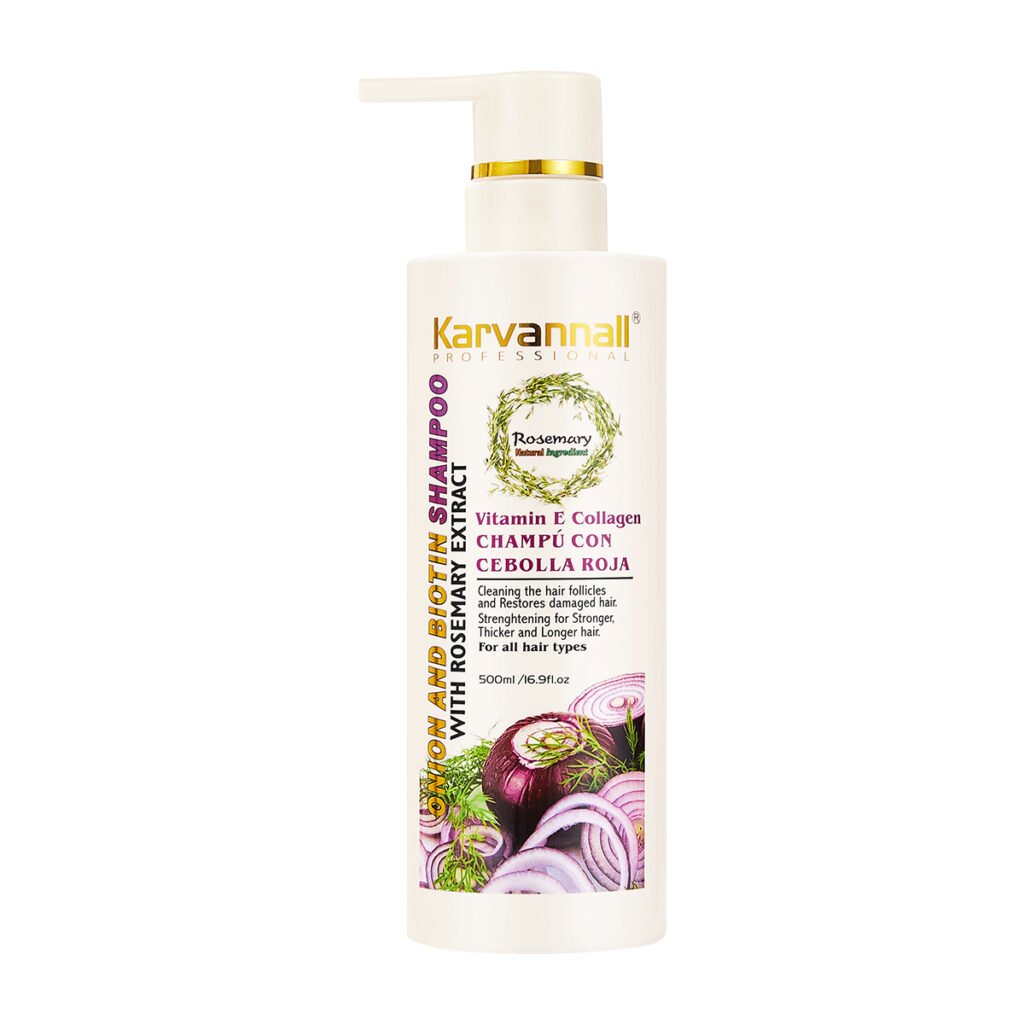
The Keratin and Argan Hair Shampoo is described on its product page as dissolving impurities and build-ups, and is made for dry, frizzy or damaged hair rather than an oily scalp. The Rosemary Biotin Anti-Hairfall Shampoo is a sulfate-free, paraben-free shampoo for hair prone to fall and gentle enough for regular washing. Neither is a scalp scrub. If you have hair fall that is sudden or patchy, see a doctor first. More choices are in the Karvannall shop.
Does scalp exfoliation help hair growth?
You may see claims that a scrub unblocks follicles and speeds growth. There is no solid evidence for that. A comfortable, clean scalp is a good base for healthy hair, but exfoliation alone does not make hair grow faster. See what works and what is a myth for hair growth.
Frequently asked questions
How often should I use a scalp scrub?
Once a week at most, and many people only need one every few weeks. Stop if the scalp becomes red, sore or more flaky.
Can a scalp scrub cause hair fall?
Gentle use should not, but vigorous scrubbing can irritate the scalp and damage hair. Use fingertips with light pressure.
Is a scalp scrub good for dandruff?
Not necessarily. Dandruff is usually caused by a yeast-related reaction on the scalp, and scrubbing can irritate it. An anti-dandruff shampoo or a doctor’s advice is the better route.
Do I need a scalp scrub if I wash my hair regularly?
Usually not. Regular, thorough shampooing removes most oil and product. A scrub is optional for people with visible build-up.