Short answer: Yes. A period of heavy physical or emotional stress can make you shed more hair, usually a couple of months after the stressful event rather than during it. This pattern is commonly called telogen effluvium, and it often settles once the trigger passes. Shampoo cannot remove stress, but gentle care, good basics and a doctor’s check for other causes can help.
How can stress cause hair fall?
Each hair grows for a long period, rests briefly, then sheds so a new one can replace it. At any time most of your scalp hair is in the growing phase. A major stressor, such as a serious illness, surgery, a sudden crash diet, a bereavement or a very demanding period at work, can push more hairs than usual into the resting phase at the same time. Those hairs then shed together.
It is not a sign that your hair roots are permanently damaged. It is a temporary shift in the hair cycle.
How long after stress does the hair fall start?
This is the part that confuses people. The shedding usually shows up about two to three months after the trigger, so by the time you notice hair in the drain, the stressful event may feel like it is already over. That delay also makes it easy to blame the wrong thing, such as a new shampoo or a new oil.
Shedding that follows a single trigger commonly eases over the following months as the hair cycle settles. Regrowth is gradual, so short new hairs along the hairline can take a while to be noticeable. If shedding carries on for many months, or you cannot name a trigger, get it checked.
Is it stress, or something else?
| What you notice | What it may point to |
|---|---|
| Even, all-over thinning a couple of months after an illness, surgery or major life event | Possibly stress-related shedding |
| Hair fall after pregnancy | Often hormonal; see our guide to postpartum hair fall |
| Patchy bald spots, or a widening parting that keeps progressing | See a dermatologist |
| Scalp pain, burning, scaling or redness | See a dermatologist |
| Fatigue, feeling cold, heavy periods along with hair fall | Ask a doctor about blood tests |
Sudden or patchy hair loss, or hair loss with scalp symptoms, is a reason to see a dermatologist rather than keep experimenting with products. Our guide on how much hair fall is normal explains what a typical daily shed looks like.
What can you do while hair is shedding?
- Address the trigger if you can. Sleep, regular meals and recovery from illness matter more than any bottle.
- Eat enough. Crash diets and very low protein intake are common triggers. Our post on diet and hair fall covers iron, protein and vitamin D without overpromising.
- Handle hair gently. Avoid tight styles, rough towelling and heat on wet hair. Hair is more fragile while it is shedding.
- Keep the scalp clean. A clean scalp is more comfortable and makes it easier to see how much you are really shedding.
- Change one thing at a time. If you switch shampoo, give it a fair trial. See how long to test a new shampoo.
Can a shampoo help with stress-related hair fall?
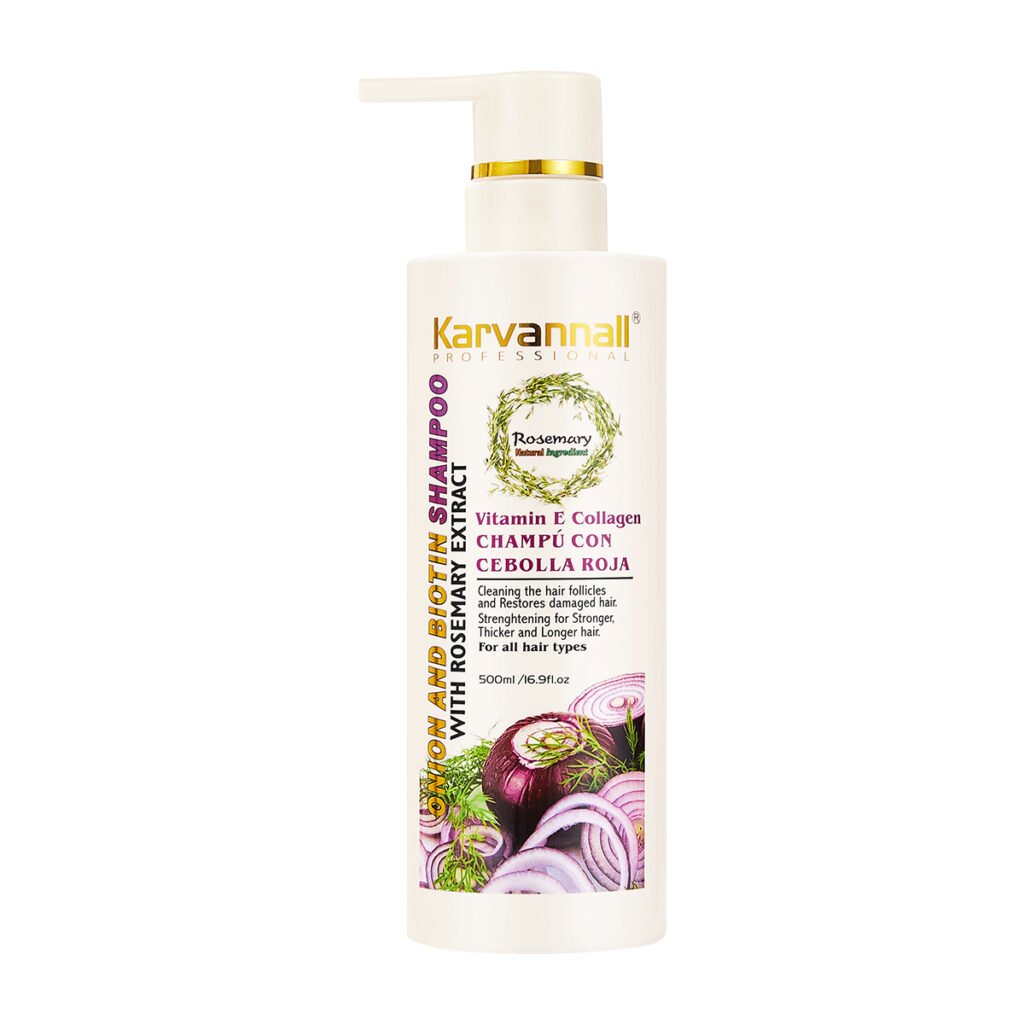
A shampoo cannot change the hair cycle, and no shampoo stops hair fall on its own. What a good one can do is clean the scalp gently and reduce breakage so you lose fewer hairs to rough handling. The Rosemary Biotin Anti-Hairfall Shampoo is a 500 ml sulfate-free and paraben-free shampoo with rosemary extract and biotin, made for hair that is prone to fall and gentle enough for regular washing. Treat it as part of a routine, not a cure. You can browse the full range in our shop.
A relaxed scalp massage while shampooing is fine, though the evidence that it speeds regrowth is limited; our post on scalp massage and hair growth goes through it.
When should you see a doctor?
- Hair is falling in clumps or you can see scalp showing quickly.
- You have bald patches.
- Shedding continues for more than about six months.
- You have other symptoms such as extreme tiredness, weight change or irregular periods.
Frequently asked questions
Can stress alone cause hair fall?
It can trigger temporary shedding, usually two to three months after a major stressor. Other causes such as nutrition, thyroid problems and hormones are worth ruling out with a doctor if shedding continues.
Will hair grow back after stress-related hair fall?
In most cases of this temporary type of shedding, hair regrows gradually once the trigger has passed, though it can take months to look noticeably fuller.
How do I know if my hair fall is from stress?
Even thinning across the scalp that begins a couple of months after a stressful event is a typical pattern. Patchy loss or scalp symptoms are not, and need a dermatologist.
Does an anti-hairfall shampoo stop stress hair loss?
No shampoo stops hair fall on its own. A gentle shampoo keeps the scalp clean and helps reduce breakage while the hair cycle recovers.