Short answer: Choose a conditioner by what your hair needs, not by the label alone. Dry or frizzy hair usually wants a richer, more hydrating formula; fine or oily-prone hair does better with a lighter one used only on the lengths. Whatever you pick, apply it from mid-length to ends and rinse well.
What does a conditioner actually do?
Shampoo cleans; conditioner smooths. Conditioners coat the hair surface so strands feel softer, tangle less and reflect more light. They do not repair hair permanently, because hair is not living tissue once it leaves the scalp. What they do is make hair easier to handle and less likely to snap when you comb it. If you are unsure how it differs from a mask, see hair mask vs conditioner.
Which conditioner suits which hair type?
| Your hair | What to look for | How to use it |
|---|---|---|
| Dry, coarse or frizzy | A hydrating, creamy formula | Mid-length to ends, leave 2 to 3 minutes |
| Fine or thin | A lightweight formula that rinses clean | Ends only, small amount |
| Oily scalp, dry ends | Light formula, never on the scalp | Ends only |
| Colour-treated | A gentle, sulfate-free system | Lengths and ends after every wash |
| Wavy or curly | A moisturising formula you can leave on a little longer | Section hair and work through gently |
How do Karvannall conditioners differ?
Based on the product pages, here is how the three conditioners are described:
- Keratin & Argan Hair Conditioner is described as deeply hydrating, with keratin protein and argan extract, aimed at smoothness, shine and manageability. It suits dry or rough hair. Read more on keratin in hair care.
- Silicone-Free Hair Conditioner is described as made for normal to oily hair, with acai extract and collagen, to leave hair soft and shiny without a greasy feel. Our silicone-free conditioner guide explains who benefits.
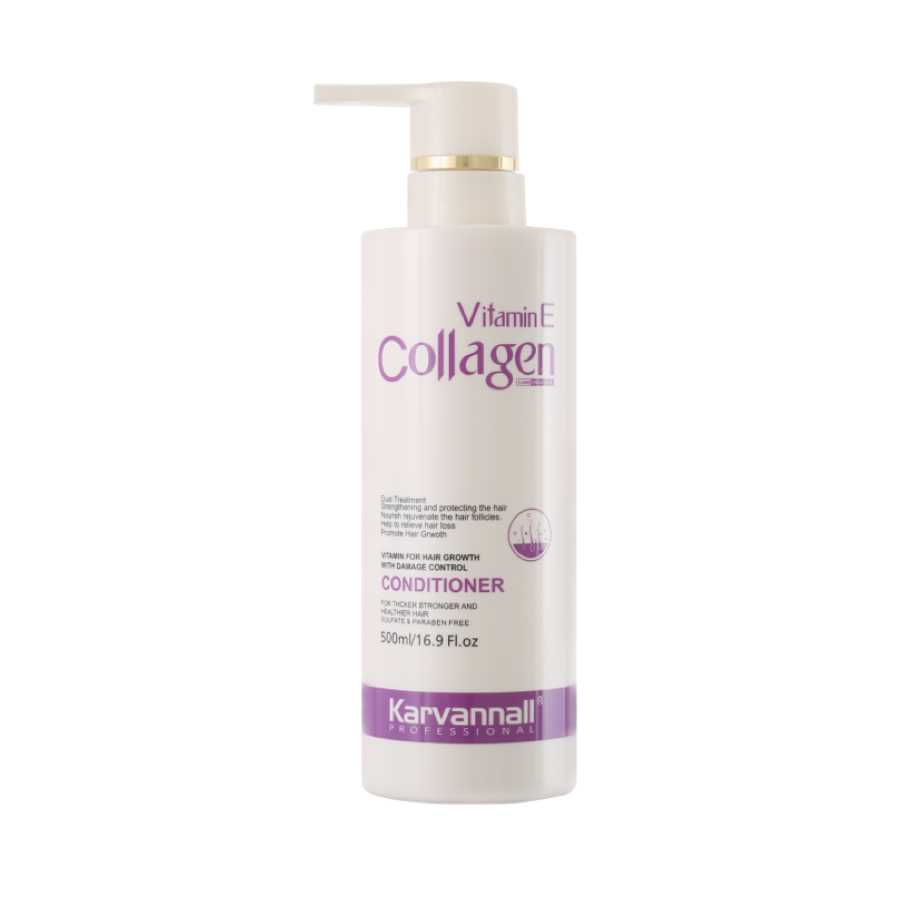
- Vitamin E Collagen Hair Conditioner is listed as sulphate-free and paraben-free, for all hair types including colour-treated hair, applied for 2 to 3 minutes before rinsing.
These descriptions are what the product pages say; individual results depend on your hair, water and routine.
How should you apply conditioner?
- Shampoo first and squeeze out excess water.
- Use a coin-sized amount for short hair and more for long hair.
- Apply from mid-length to ends, avoiding the scalp if it gets oily quickly.
- Comb through with fingers or a wide-tooth comb.
- Wait one to three minutes, then rinse thoroughly.
More detail is in how to use conditioner properly.
What mistakes make conditioner feel useless?
- Putting a heavy formula on the scalp, which can make roots limp.
- Rinsing too early or too late.
- Using far too much on fine hair.
- Expecting it to fix split ends, which only a trim removes (see can split ends be repaired).
Browse the full range in the shop.
Frequently asked questions
Should I use conditioner after every wash?
Most people benefit from conditioning the lengths after every shampoo, especially if hair is dry, long or coloured. Very fine hair may need only a small amount.
Can I put conditioner on my scalp?
It is usually best to keep conditioner on the lengths and ends. Heavy products on an oily scalp can make roots greasy faster.
How long should I leave conditioner on?
Follow the product directions. The Karvannall pages suggest about one to three minutes before rinsing thoroughly.
Is silicone-free conditioner better?
Not for everyone. It can suit people who feel build-up or have oily or fine hair, while some dry hair likes the slip of silicones. It depends on your hair.