Short answer: Dandruff on its own is not generally considered a direct cause of hair loss, because flakes form on the surface of the skin and do not remove the hair root. But dandruff can still go hand in hand with more hair on your brush: hard scratching, an irritated scalp and rough handling can all increase breakage and shedding. If your hair is visibly thinning, treat dandruff and hair fall as two separate questions and get the second one checked.
Why do people connect dandruff with hair fall?
Both problems show up on the scalp, and both often get worse at the same time, for example in dry winter weather or after a stressful few weeks. When you see flakes on your shoulders and hair in the drain on the same day, it is natural to assume one caused the other. Sometimes they share a trigger, and sometimes they are simply two unrelated things happening together.
How can dandruff indirectly lead to more hair on the brush?
- Scratching. An itchy scalp tempts you to scratch with your nails, which can irritate the skin and snap hair close to the root.
- Aggressive washing and combing. People with flaky scalps often scrub hard or drag a comb through wet hair to remove flakes. Wet hair is more fragile, so breakage goes up.
- Changing products constantly. Trying a new shampoo every week can leave the scalp more irritated and makes it impossible to tell what is working. Our post on hair fall after changing shampoo explains how long to test a new one.
- Heavy oiling over flakes. Layering oil onto a flaky scalp and leaving it for days can add build-up. Hair oil and dandruff covers what is really going on.
In each case the hair is being broken or pulled out by what we do to a bothered scalp. The flakes themselves are not killing the follicle.
Is it breakage, normal shedding or something else?
Look closely at the fallen hairs. The table below is a rough guide, not a diagnosis.
| What you see | Likely meaning |
|---|---|
| Full-length hairs, small white bulb at one end | Natural shedding from the growth cycle |
| Short hairs of different lengths, no bulb | Breakage from scratching, friction or dryness |
| Flakes plus itching, hair otherwise full | Dandruff or dry scalp without real hair loss |
| Widening parting, patches, or clumps coming out | Needs a doctor, whatever the flakes are doing |
Losing some hair every day is normal. Our guide on how much hair fall is normal and the explainer on hair breakage vs hair fall will help you judge what you are seeing.
How do I know if it is dandruff or just a dry scalp?
Dandruff flakes tend to be larger and slightly yellowish, often with an oily or itchy scalp. A dry scalp usually gives smaller, white, powdery flakes and skin that feels tight, and it often worsens in winter. The two need slightly different care, and they can overlap. Read dandruff vs dry scalp and itchy scalp causes and when to see a doctor if you are not sure.
What can I do at home to protect my hair while I deal with flakes?
- Wash regularly with a shampoo made for flaky scalps and follow the label. How to use anti-dandruff shampoo covers frequency and lather time.
- Massage with your fingertips, not your nails. Use light circles so you loosen flakes without scratching.
- Rinse thoroughly. Leftover shampoo can itch and flake just like dandruff.
- Condition mid-lengths and ends, not the scalp, so hair is softer and breaks less during combing.
- Detangle gently with a wide-tooth comb, starting at the ends.
- Give a product a fair trial. Judge a shampoo over several weeks of regular use, not after one or two washes.
Which Karvannall products might suit a flaky scalp or hair that sheds?
The Keratin and Argan 2-in-1 Anti-Dandruff and Anti Hair Fall Shampoo is described on its page as a sulfate-free, paraben-free shampoo for dandruff-prone scalps and for hair that is dry, frizzy or colour-treated. Its page says it is formulated to support a clean, balanced scalp and that it is a cosmetic product, not a medical treatment. The matching 2-in-1 conditioner goes on the lengths and ends.
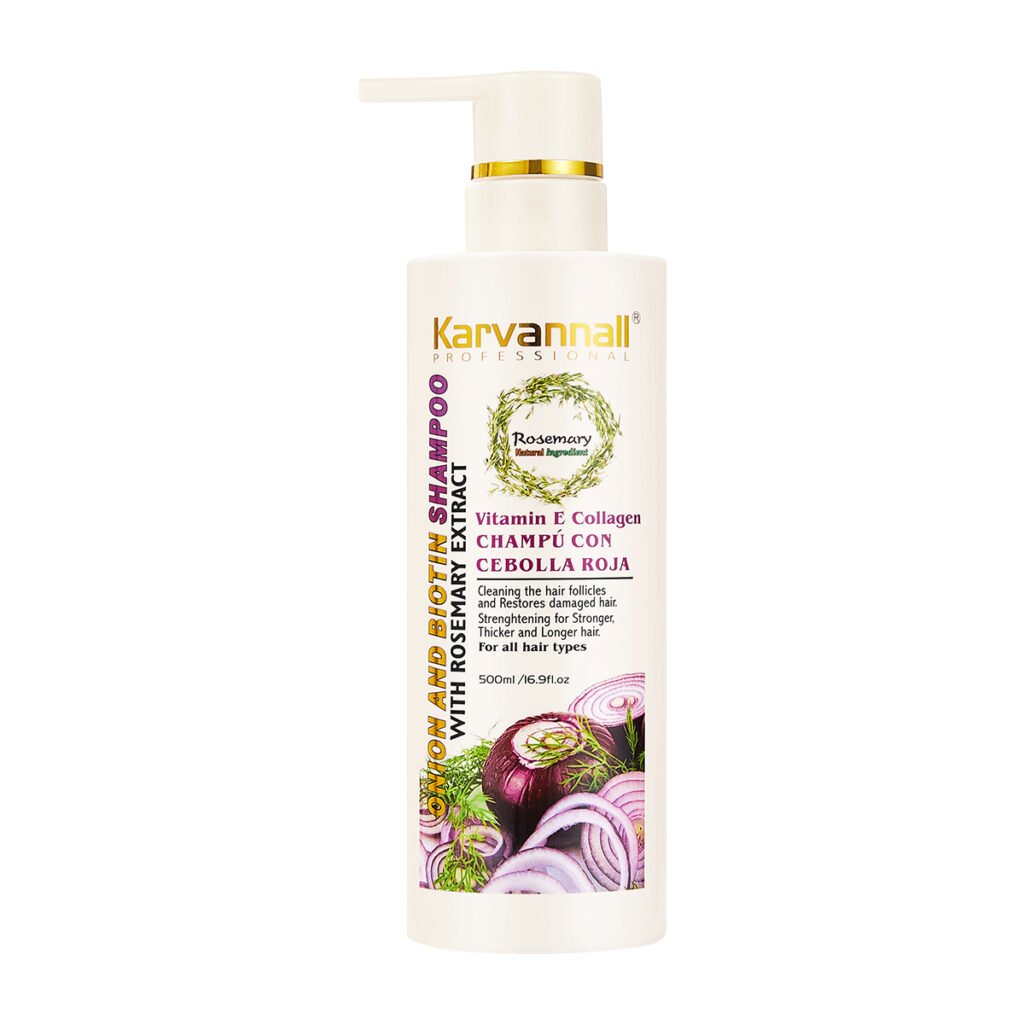
If shedding is your main worry rather than flakes, the Rosemary Biotin Anti-Hairfall Shampoo is made for hair that is prone to fall and is gentle enough for regular washing. Its page is clear that no shampoo stops hair fall on its own. You can compare the full range in the shop.
When should I see a dermatologist?
Book an appointment if hair loss is sudden or patchy, your parting is widening, the scalp is red, painful, scaly or oozing, or the flaking does not improve after a few weeks of consistent care. Conditions such as seborrhoeic dermatitis, psoriasis or a fungal infection need a proper diagnosis, and changing shampoo again will not solve them.
Frequently asked questions
Does dandruff cause permanent hair loss?
Dandruff is not generally considered a cause of permanent hair loss. Scratching and rough handling can cause breakage, and hair usually recovers once the scalp settles. Persistent or patchy loss should be checked by a dermatologist.
Can an anti-dandruff shampoo stop hair fall?
Not by itself. A shampoo can help keep the scalp clean and comfortable, which may reduce scratching and breakage, but it cannot treat the medical causes of hair loss.
Is it normal to see hair fall when I have dandruff?
Some daily shedding is normal whether or not you have flakes. It becomes a concern when you notice thinning, a widening parting or hair coming out in clumps.
How long should I try a dandruff shampoo before changing it?
Use it regularly for a few weeks and follow the label. If flaking and itching have not improved by then, see a doctor rather than switching products repeatedly.