Short answer: Every hair on your head moves through a repeating cycle with three main phases: a long growing phase (anagen), a short transition phase (catagen) and a resting phase (telogen) that ends when the hair sheds. Because each hair is at a different stage, you lose some hair every day while the rest keeps growing. Knowing the cycle also explains why a stressful event or a product change can take two to three months to show up in your hair.
What are the phases of the hair growth cycle?
| Phase | What happens | Rough duration |
|---|---|---|
| Anagen (growth) | The follicle actively makes new hair, which lengthens | Several years; this phase sets how long your hair can grow |
| Catagen (transition) | Growth stops and the follicle shrinks | A few weeks |
| Telogen (rest) | The hair stays in place without growing; a new hair begins forming beneath it | Around three months |
| Shedding (exogen) | The old hair is released and falls out | Happens during or at the end of telogen |
These durations are typical ranges and vary from person to person, which is one reason some people can grow hair past their waist while others find it stops at the shoulders.
Why does anagen length decide how long my hair can grow?
Hair grows at a fairly steady rate, commonly quoted at around a centimetre a month, though it varies by person. How long it can grow before shedding depends on how long its anagen phase lasts. A hair with a long anagen phase can reach a great length; a hair with a shorter one reaches its limit sooner and then sheds. That is why the advice in our guide on how to make hair grow faster is mostly about keeping hair healthy and unbroken rather than speeding up the follicle.
Why do I lose hair every day if growth is continuous?
At any moment, most of your scalp hairs are in anagen and a smaller share are in telogen. The hairs finishing telogen are the ones you find on your pillow and in the shower drain. A modest daily loss is a sign of a working cycle, not a problem. See how much hair fall is normal for how to judge your own pattern.
What is telogen effluvium and why does hair fall months after a trigger?
Sometimes a large number of hairs shift into the resting phase at once, and a few months later they all shed together. This is called telogen effluvium. Common triggers include high fever or illness, major stress, rapid weight loss, nutritional gaps and childbirth. Because telogen lasts around three months, the shedding appears well after the trigger, which is why people often cannot link it to the event. Our posts on stress and hair fall, postpartum hair fall and diet and hair fall look at the main ones. In many cases the cycle settles and hair recovers once the trigger has passed, but that is a conversation for a doctor, not a guess.
What can you do to support a healthy cycle?
- Eat enough protein and a varied diet. Hair is made largely of protein, and crash diets are a common trigger for shedding.
- Be gentle with wet hair. Breakage looks like hair fall but is a separate problem; see hair breakage vs hair fall.
- Keep the scalp clean and comfortable. Wash on a routine that suits your scalp, and avoid scratching.
- Avoid very tight hairstyles that pull on the roots every day. See tight hairstyles and hair loss.
- Be patient. A new routine needs at least a few months before you can judge any change in density.
Where do shampoo and conditioner fit in?
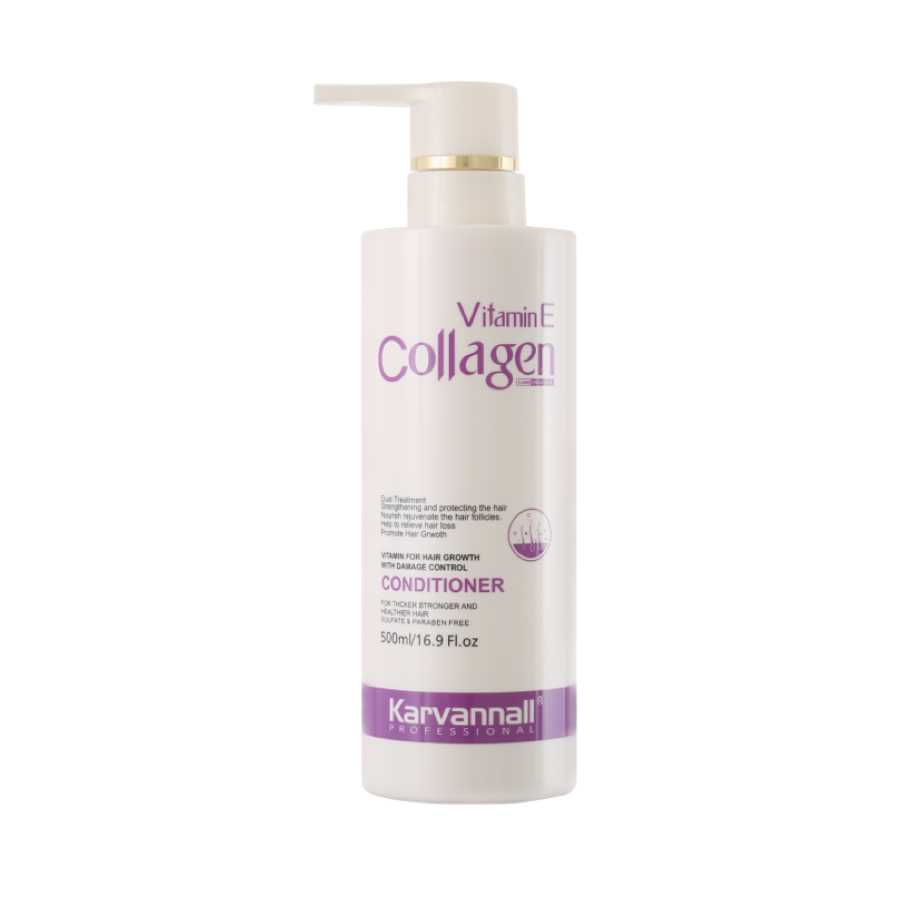
Hair care products cannot change the biological cycle, but they can keep the hair you already have from breaking and keep the scalp clean. The Rosemary Biotin Anti-Hairfall Shampoo is made for hair that is prone to fall and is gentle enough for regular washing. Its page is clear that no shampoo stops hair fall on its own, and that you should see a doctor if loss is sudden, patchy or severe. To keep the lengths softer and less likely to snap, the Vitamin E Collagen Hair Conditioner goes on mid-lengths and ends after shampooing, left on for two to three minutes. You can browse everything in the shop.
When is hair fall more than the normal cycle?
See a dermatologist if you notice sudden heavy shedding, bald patches, a parting that keeps widening, hair thinning at the temples or crown over months, or a painful or inflamed scalp. A doctor can check for causes such as thyroid problems, iron deficiency or hormonal conditions that shampoo cannot address.
Frequently asked questions
How long does each hair stay on the head?
It varies by person. A single hair can stay in its growing phase for several years, followed by a short transition and a resting phase of about three months before it sheds.
Do all hairs grow and shed at the same time?
No. Each follicle runs its own cycle, so hairs are at different stages at any moment. That is why you lose a few hairs daily rather than going bald in patches.
Why did my hair start falling two or three months after an illness?
A major trigger can push many hairs into the resting phase together. They shed a few months later, a pattern called telogen effluvium. See a doctor if it continues.
Can a shampoo change my hair growth cycle?
No. Shampoo and conditioner can keep the scalp clean and reduce breakage, but they do not change the biological cycle of the follicle.