Short answer: A silk or satin pillowcase can help a little, because a smoother surface creates less friction on your hair while you sleep. That may mean slightly less frizz, fewer tangles and less rubbing on fragile ends. It is a nice extra, not a treatment, and there is little rigorous research behind the hair claims, so do not expect it to repair damage or stop hair fall.
Why would a pillowcase affect your hair?
You move many times a night. Hair rubbing against a rougher fabric such as some cotton weaves can roughen the outer layer of the strand and tangle long hair, especially if it is dry or already damaged. A smooth fabric lets hair slide instead of catching. The same idea is why a smooth towel or soft fabric tie is gentler than a rough one.
Frizz is often the visible result of a roughened outer layer on dry hair. If frizz is your main issue, moisture matters more than the pillowcase; see how to control frizz in monsoon and dry hair in winter.
Silk vs satin: what is the difference?
| Silk | Satin | |
|---|---|---|
| What it is | A natural protein fibre | A weave, often made from polyester |
| Feel | Very smooth, breathable | Smooth and glossy, can feel warmer |
| Care | Usually gentle wash, more delicate | Usually easier to wash |
| Cost | Usually higher | Usually lower |
For the hair, what matters most is the smooth surface, which both can offer. Pick whichever you can keep clean and will actually use. Check the label, as some products are labelled silk but are blends.
Who is most likely to notice a difference?
- Long hair that tangles overnight
- Curly or wavy hair that frizzes after sleeping; our curly hair care routine has more
- Dry, coloured or heat-styled hair where ends are fragile
- Anyone who wakes up with static; see static hair in winter
If your hair is short, fine and healthy, you may notice little change.
What else helps at night?
A pillowcase alone will not do much if hair goes to bed wet, tight or dry. These habits matter more:
- Go to bed with dry or nearly dry hair. Wet hair is more fragile; read is it bad to sleep with wet hair.
- Loosen your hair. A loose braid or a loose bun avoids tension on one spot.
- Use a soft tie, not a thin elastic band.
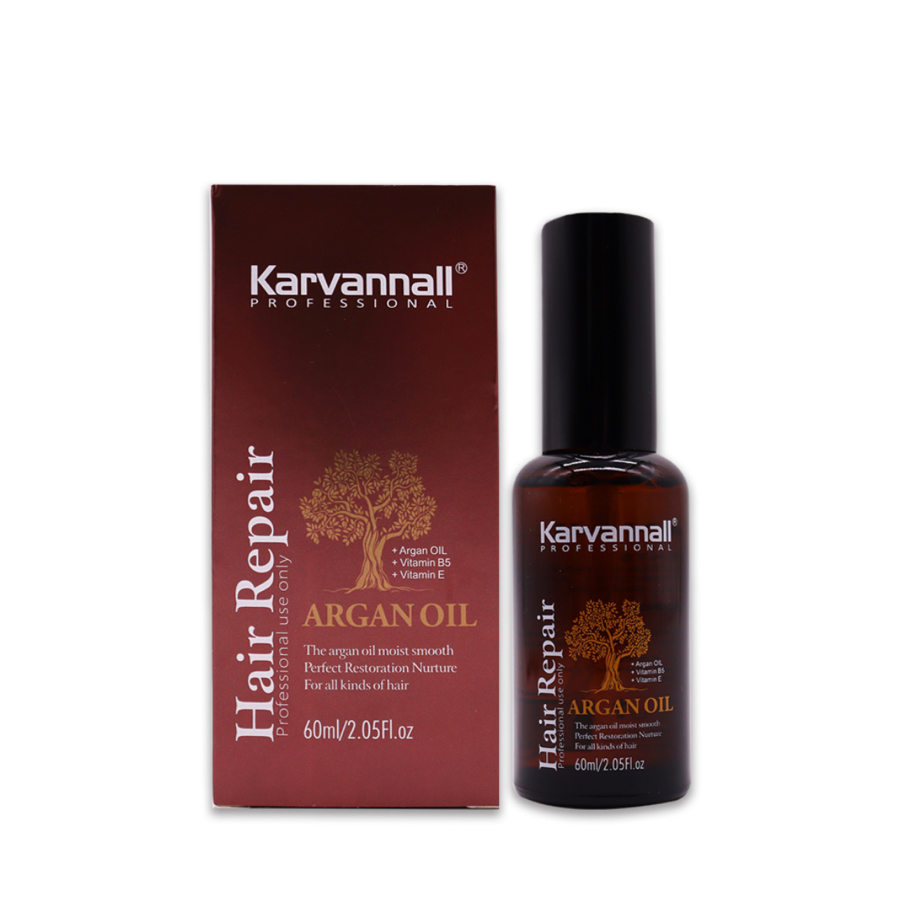
- Smooth the ends with a few drops of oil on dry ends. The Karvannall Argan Oil is a lightweight oil that its product page says smooths frizz and flyaways and boosts shine; two or three drops warmed between your palms is what it suggests for mid-length hair, and more tends to look greasy.
- Condition properly in the shower, on the mid-lengths and ends. The Vitamin E Collagen Hair Conditioner and the Keratin and Argan Hair Conditioner are both available in the shop.
For the full evening routine, see our night-time hair care routine.
Will it stop hair fall or help hair grow?
No. Hair loss has causes such as hormones, stress, nutrition and scalp health, and a pillowcase does not change those. It may reduce breakage on weak strands, which can mean fewer short broken hairs, but that is different from shedding from the root. If you are not sure which you have, read hair breakage vs hair fall. Sudden or patchy hair loss should be checked by a dermatologist.
How do you look after the pillowcase?
Wash it regularly, as oil, sweat and product transfer from hair and skin onto the fabric. Follow the care label and use a gentle detergent. Change it more often if you use oil on your hair at night.
Frequently asked questions
Does a silk pillowcase really help hair?
It can reduce friction, which may mean less frizz and tangling for some people. There is little rigorous research, so treat it as a small extra rather than a treatment.
Is satin as good as silk for hair?
For reducing friction, a smooth satin weave can work similarly to silk. Silk is a natural fibre and satin is a weave, often made of polyester, so they differ in feel, breathability and price.
Can a silk pillowcase stop hair fall?
No. Hair fall has causes such as hormones, stress, nutrition and scalp conditions. A smoother pillowcase may reduce breakage on fragile strands but does not stop shedding from the root.
How often should I wash a silk pillowcase?
Many people wash it about once a week, following the care label. Wash it more often if you oil your hair at night or sweat a lot.