Short answer: Static hair happens when dry winter air lets friction (from a cap, scarf, towel or comb) build up an electric charge on hair strands. Moisture is the fix: condition well, avoid rough friction, add a little leave-in product to dry hair, and keep the air around you from getting too dry.
Why does hair get static in winter?
Hair is a poor conductor of electricity. When it rubs against wool, synthetic fabric, a plastic comb or a woollen cap, electrons transfer and the strands pick up the same charge. Same-charged strands repel each other, so they stand apart and float. In humid months the moisture in the air carries that charge away quickly. In dry winter air, and in heated rooms, it stays on the hair.
Hair that is already dry or rough on the surface tends to pick up static more easily, which is why the problem is often worse for people who also deal with winter dryness.
What makes static worse?
- Towel rubbing. Roughly scrubbing wet hair raises the cuticle and creates friction.
- Synthetic fabrics. Polyester scarves, hoods and woollen caps rub the hair as you move.
- Plastic combs and brushes. Plastic builds charge more readily than wood or a good boar-bristle brush.
- Over-washing or skipping conditioner. Hair without conditioning has a rougher surface.
- Very hot hair dryers. Heat strips moisture from the hair surface; read our guide on protecting hair from heat styling.
- Dry indoor air, especially in rooms with heaters or air conditioning running at night.
How do you reduce static hair after washing?
- Always condition mid-length to ends. After shampooing, apply conditioner from mid-shaft to the tips, leave it for the time stated on the label, and rinse well. A conditioner such as the Keratin & Argan Hair Conditioner is described on its product page as hydrating and helping with smoothness, shine and manageability. Our guide to using conditioner properly covers the steps.
- Pat, do not rub. Squeeze water out with a soft cotton T-shirt or microfibre towel instead of rubbing.
- Detangle gently. Use a wide-tooth comb on damp hair, starting from the ends. See how to detangle wet hair without breakage.
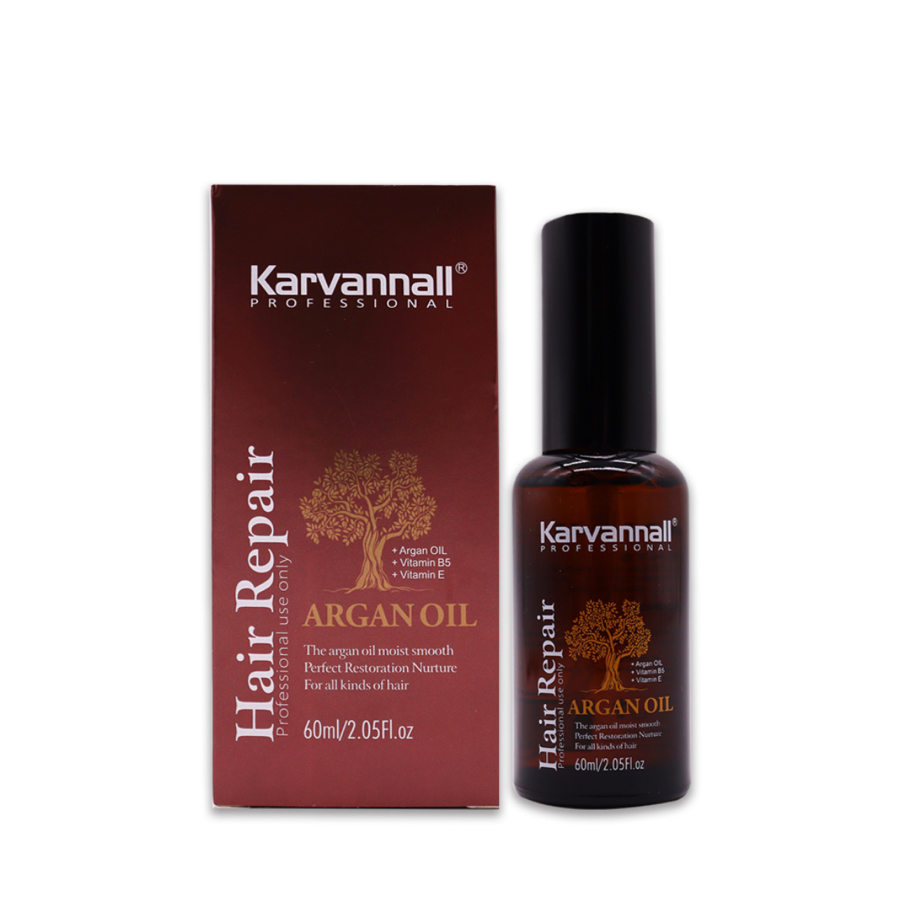
- Add a little oil to damp hair. A few drops of a light oil rubbed between the palms and smoothed over damp hair helps coat the surface. The Karvannall Argan Oil page says to apply it to wet or damp hair, spread it from roots to ends, and not rinse it out. Use very little; too much will make fine hair look heavy.
- Let hair dry mostly in the air, or use the dryer on a medium setting and stop while hair is still slightly damp.
What can you do during the day when hair flies up?
Quick fixes work best when you do them lightly. Rub a tiny amount of oil or leave-in product between your palms, then glide your hands over the top layer and ends. Alternatively, run a damp (not dripping) palm over the hair to remove charge. Switching from a plastic comb to a wooden one and wearing a silk or satin-lined cap or a cotton scarf also reduces friction.
Avoid spraying water repeatedly on dry hair; it evaporates quickly and can leave the hair drier than before.
Does a hair mask help with static?
It can, indirectly. Static is worse on dry, rough hair, so a weekly mask that adds moisture may reduce it over time. The Collagen Shea Butter Moisture Hair Treatment Mask is listed for dry, damaged and weakened hair, with usage directions of 5 to 7 minutes on towel-dried hair, two to three times a week. If your hair is fine or oily at the roots, start with once a week and keep the mask away from the scalp. More on timing is in our guide on how to use a hair mask.
A simple winter routine for static-prone hair
| Step | What to do | How often |
|---|---|---|
| Shampoo | Wash the scalp gently; do not scrub the lengths | As your scalp needs |
| Conditioner | Mid-shaft to ends, rinse thoroughly | Every wash |
| Mask | Moisturising mask on towel-dried hair | Once or twice a week |
| Oil or leave-in | A few drops on damp ends | After washing |
| Tools | Wooden comb, cotton or satin cap | Daily |
When is static a sign of something else?
Static on its own is a surface problem and not a sign of illness. But if you notice a lot of broken short hairs, sudden shedding, patchy thinning, or an itchy, painful or flaking scalp, do not assume it is winter dryness. Read our guide on winter hair fall: shedding or dryness breakage, and see a dermatologist if symptoms are sudden, patchy or persistent.
Browse the full range in the Karvannall shop.
Frequently asked questions
Why is my hair so static after washing?
Rough towel drying, skipping conditioner, hot dryer settings and dry air all raise static. Condition the lengths, pat hair dry and add a little oil to damp ends.
Does conditioner reduce static hair?
Yes, usually. Conditioner smooths the hair surface and adds moisture, which lowers friction and the charge that builds up between strands.
Can hair oil help with flyaways?
A small amount of light oil on damp or dry ends can tame flyaways. Use only a few drops, as too much can make hair look limp or greasy.
Is static hair a sign of hair damage?
Not by itself. It is often worse on dry or rough hair, so it can go along with dryness, but sudden shedding or scalp symptoms should be checked by a dermatologist.