Short answer: hair that feels sticky, waxy or limp after conditioner is usually a sign of too much product, product left on the scalp or roots, poor rinsing, or build-up from earlier washes. It is rarely a sign that conditioner itself is wrong for you. Using less, applying only to mid-lengths and ends, and rinsing for longer fixes most cases.
Why does my hair feel sticky after conditioner?
Conditioner is designed to leave a thin film on the hair surface so strands feel smoother and tangle less. When that film gets too thick, or is left where it should not be, hair feels coated rather than soft. The usual causes are:
- Too much product. Fine or thin hair needs far less than thick hair. A coin-sized amount is often enough for shoulder-length fine hair.
- Applying at the roots. Scalp oil already conditions the first few centimetres of hair. Extra conditioner there tends to make roots flat and greasy.
- Short rinsing. If the water runs but the conditioner is not fully rinsed from the lengths, it dries into a tacky film.
- Build-up. Layers of conditioner, oils, serums and styling products can stack up over weeks, especially if shampooing is infrequent.
- Hard water. Minerals in the water can leave hair feeling stiff or coated after rinsing.
Is it sticky, or is it just heavy?
These feel different and point to different fixes.
| What you notice | Likely cause | What to try |
|---|---|---|
| Tacky or waxy while still wet | Not rinsed out fully | Rinse for another 30 to 60 seconds, finishing with cool water |
| Flat, greasy roots by evening | Conditioner applied too close to the scalp | Start at mid-lengths and keep it off the scalp |
| Limp, heavy hair that will not hold shape | Too much product or too rich for your hair | Halve the amount and try a lighter formula |
| Dull, stiff hair that worsens over weeks | Build-up or hard water | Use a clarifying shampoo occasionally |
How should I apply conditioner so hair does not feel coated?
- Shampoo first, and rinse the shampoo out fully.
- Squeeze excess water from your hair so conditioner is not diluted and slides off.
- Take a small amount, warm it between your palms, and apply from mid-length to the ends.
- Comb through gently with your fingers or a wide-tooth comb.
- Leave it for the time on the label, then rinse until the hair no longer feels slippery.
We cover the full routine in our guide on how to use conditioner properly.
Could build-up be the problem?
If hair felt fine a month ago and has slowly become heavy, build-up is a likely suspect. A clarifying shampoo used occasionally can reset things, and our post on signs of product build-up explains how to tell. Use a clarifying shampoo sparingly and follow with conditioner on the ends, because it can feel drying.
Does the type of conditioner matter?
Yes, to a degree. Richer, thicker conditioners suit dry, coarse or damaged hair; fine or oily-rooted hair often does better with a lighter one. Some people also prefer to avoid silicones because they find them heavier over time, while others like the instant smooth feel. Neither choice is wrong, and our silicone-free conditioner guide and how to choose a conditioner for your hair type will help you decide.
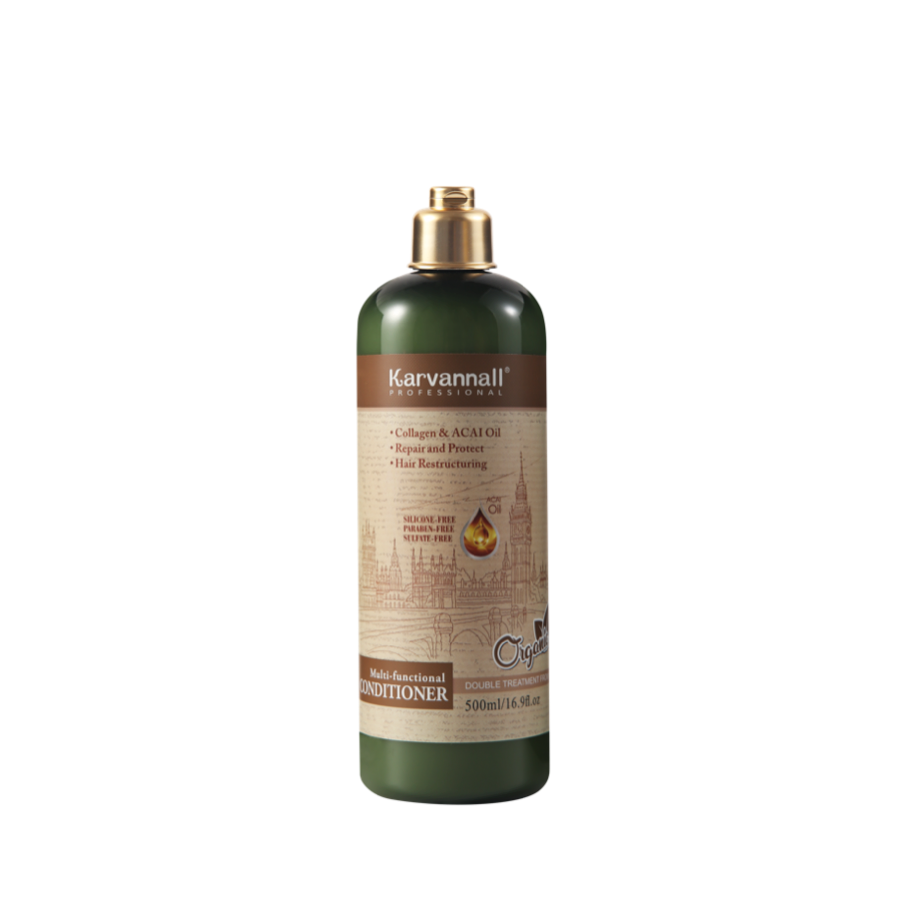
If you want to try a silicone-free option, the Karvannall Silicone-Free Hair Conditioner is described on its page as made for normal to oily hair, to leave hair soft and shiny without feeling greasy. If your hair is dry or damaged, the Keratin and Argan Hair Conditioner or the Vitamin E Collagen Hair Conditioner may be closer to what you need. You can see everything in the shop.
If you are changing from a silicone product, give your hair three or four washes before judging the result, as the product page for the silicone-free conditioner suggests.
When should I see a professional?
Stickiness that persists after you have reduced the amount, rinsed well and clarified is worth discussing with a stylist. If you also have scalp itching, redness, flaking or sudden hair loss, see a dermatologist rather than changing products repeatedly.
Frequently asked questions
Why does my hair feel sticky after conditioner even when I rinse?
Often the conditioner was applied too close to the scalp, the amount was too much for your hair, or build-up from earlier products is present. Use less, keep it to mid-lengths and ends, and consider an occasional clarifying shampoo.
How much conditioner should I use?
Start with a coin-sized amount for shoulder-length hair and add only if needed. Fine hair needs less than thick or long hair.
Can I use conditioner on my scalp?
It is generally better to keep it off the scalp and roots, which makes hair flat and greasy for many people. Apply from mid-length to ends.
Is silicone the reason my hair feels coated?
It can be for some people, because silicones sit on the hair surface and can build up over time. Others like the smooth feel, so it depends on your hair and how often you clarify.