Short answer: Teenagers need a short, consistent routine: shampoo the scalp when it feels oily or sweaty, condition the lengths and ends, go easy on heat and tight styles, and leave anything fancy for later. Hormonal changes during the teen years can make the scalp oilier, so washing a little more often is normal. Most hair problems at this age are about habits, not products.
Why does hair change during the teen years?
During puberty, hormone changes can make the scalp produce more oil, which is why hair that felt fine at twelve may look greasy by the second day at fifteen. At the same time, many teenagers start sports, heat styling, hair colour and tight hairstyles, and many spend long hours in uniform collars, helmets and hostels with hard water. All of that shows up in the hair.
None of this means you need ten products. A basic routine, done regularly, does most of the work.
What is a simple routine for school and college days?
- Wash when the scalp needs it. For an oily scalp that is often every day or every second day. Use a small amount of shampoo on the scalp and let the rinse carry it down the lengths. Our guide on how to wash your hair properly explains the technique.
- Condition the mid-lengths and ends after shampooing, not the scalp. Leave it for a minute or two and rinse well.
- Dry gently. Squeeze out water with a soft towel, comb from the ends upward with a wide-tooth comb, and let hair air-dry when you have time.
- Add a mask once a week only if the ends feel dry. This is optional.
- Keep heat tools for special days, and use a heat protectant when you do.
If you are not sure which shampoo suits you, read how to choose a shampoo for your hair type and scalp or our guide to shampoo for an oily scalp in India.
What if the scalp gets oily but the ends stay dry?
That is very common. Keep conditioner and any mask away from the roots and use them on the lengths only. You can read more in oily roots and dry ends: how to care for combination hair.
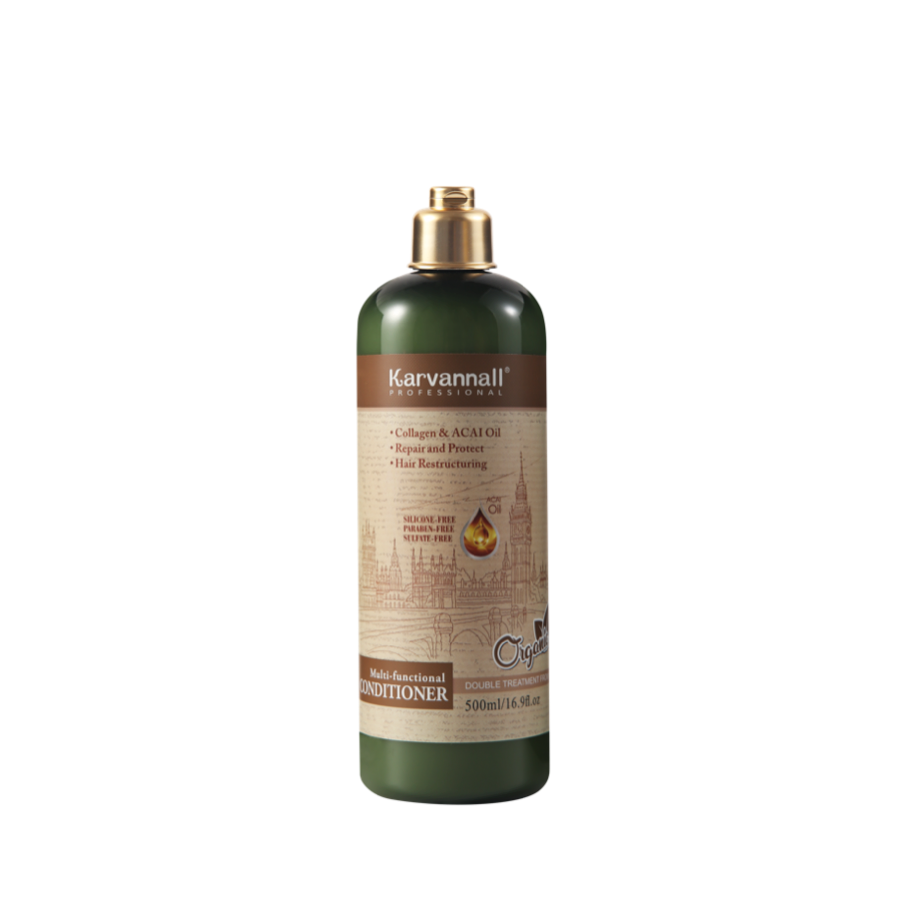
One product described for this kind of hair is the Karvannall Silicone-Free Hair Conditioner. Its page says it is formulated for normal to oily hair, with acai extract and collagen, and aims to leave hair soft and shiny without making it greasy. It goes on from the mid-shafts to the ends, stays on for one to two minutes and is rinsed out. For a light touch on dry ends, Karvannall Argan Oil is described as a lightweight oil; two or three drops on damp ends is plenty.
What about sweat, sports and helmets?
- Sports and gym. You do not have to shampoo after every session. Rinse the sweat off with water if you need to, and shampoo when your scalp feels dirty. Our post on washing hair after a workout explains the options.
- Helmets and caps. Wash and dry the helmet liner often, and read helmet hair care tips.
- Swimming. Wet hair with clean water before getting in the pool and wash soon after. See protecting hair from chlorine.
Which habits do the most damage at this age?
| Habit | What can happen | Better option |
|---|---|---|
| Tight ponytails and buns every day | Strands break at the tie, scalp may feel sore | Looser styles, soft ties, change the position |
| Brushing wet hair hard | Snapped hair and split ends | Wide-tooth comb, ends first |
| Daily straightening | Dry, rough, brittle ends | Save it for events, use a heat protectant |
| Skipping meals or crash diets | Hair can thin when the body is short of nutrients | Regular, balanced meals |
| Sharing combs and towels | Can spread scalp problems and lice | Keep personal items separate |
When is hair fall a concern?
Losing some hair every day is normal. Our guide on how much hair fall is normal gives a way to judge it. If hair is falling in clumps, you notice a bald patch, the scalp is painful, very itchy or scaly, or the problem lasts for weeks, a parent or guardian should take you to a doctor or dermatologist. A shampoo cannot fix those. For flakes and itch, see dandruff versus dry scalp.
A few product tips for parents and teens
- Introduce one new product at a time so you can tell what causes a reaction.
- Try a small amount on the inner forearm first if the skin is sensitive.
- Ask for the full ingredient list if there are known allergies. The product pages on this site say how to request it.
Frequently asked questions
How often should a teenager wash their hair?
It depends on how oily the scalp gets. Many teenagers with oily scalps wash every day or every second day. Wash when the scalp feels oily or sweaty, and use a small amount of shampoo.
Do teenagers need conditioner?
Most people benefit from conditioner on the mid-lengths and ends, even with an oily scalp. Keep it off the roots and rinse it out well.
Why is my teenager’s hair so oily?
Hormonal changes during puberty can make the scalp produce more oil. This is common and usually settles into a pattern. Regular washing helps, and a doctor can advise if the scalp is also itchy or flaky.
Is hair fall normal in teenagers?
Some daily shedding is normal at any age. If hair falls in clumps, thins quickly or leaves bald patches, see a doctor or dermatologist instead of changing products.